

PROJEKTE


Turbomaschinen für zukünftige Energiewandlungssysteme
Wasserstoff-Forschung am Institut für Turbomaschinen und Fluid-Dynamik (Leibniz Universität Hannover)
Für die Umsetzung der Energiewende spielt erfolgreiche Forschung an Universitäten und Hochschulen eine entscheidende Rolle. Denn die Forschung sorgt für technologische Innovation und hilft dabei, Lösungen für komplexe Herausforderungen zu finden. Zudem trägt die Forschung dazu bei, neue oder verbesserte Produkte und Verfahren zu entwickeln, welche die Wettbewerbsfähigkeit steigern und neue Märkte erschließen können. Dies gilt speziell im Kontext Wasserstoff, da der Aufbau der Wasserstoffwirtschaft noch in den Startlöchern steht. Doch wie sieht die Wasserstoff-Forschung konkret aus? Wir haben beim Institut für Turbomaschinen und Fluid-Dynamik (TFD) der Leibniz Universität Hannover nachgefragt, wie die Forschung im Themenfeld Wasserstoff am Institut abläuft
„Die Verwendung von Wasserstoff im Mobilitätssektor ist aktuell sehr gefragt: Insbesondere in Bereichen, in denen eine Elektrifizierung nur schwer möglich ist – also z.B. im Schwerlast-, im Zug- oder Flugverkehr – kann der Einsatz von Wasserstoff für die notwendige Dekarbonisierung des Verkehrs sorgen“, so Prof. Seume, Leiter des Instituts für Turbomaschinen und Fluid -Dynamik (TFD).
Sogenannte Turbomaschinen sind in diesem Kontext wichtige Komponenten, um den Wirkungsgrad und die Leistungsdichte bei der Wasserstoff-Nutzung zu verbessern und demzufolge Emissionen zu reduzieren. Das Institut für Turbomaschinen und Fluid-Dynamik (TFD) der Leibniz Universität Hannover forscht dazu an vielfältigen Projekten, in denen der effiziente Wasserstoff-Einsatz geprüft wird – sei es chemisch umgesetzt in der PEM-Brennstoffzelle oder verbrannt in Wasserstoff-Motoren und Flugzeugtriebwerken. Die vielfältigen Forschungsgebiete im Kontext Wasserstoff betont auch Dr. Dajan Mimic, Gruppenleiter Axialverdichter im TFD: „Die Themen Wasserstoff und Turbomaschinen sind vielfältig verknüpft. Die Anwendungsmöglichkeiten reichen von Wasserstoff-betriebenen Gasturbinen über Brennstoffzellen-Luftversorgungssysteme bis hin zur vollständigen Integration von Brennstoffzellen in hybride Flugtriebwerksarchitekturen.“
Wasserstoff im Fokus zahlreicher Forschungsprojekte
Die Vielfältigkeit der Wasserstoff-Forschung wird auch bei einem Blick auf die Forschungsprojekte deutlich, die am TFD umgesetzt werden. Im Jahr 2021 wurde das vom Land Niedersachsen geförderte Forschungskonsortium „Nachhaltige Wasserstoff-Verbrennungskonzepte (WaVe)“ gestartet. Im Rahmen des Projektes untersucht das TFD Möglichkeiten der sogenannten Hochaufladung von Wasserstoff-Motoren. Motivation ist es, die Verbrennungstemperaturen durch einen großen Luftüberschuss zu reduzieren und dadurch Stickoxidemissionen nahezu gänzlich zu vermeiden. Hierdurch können saubere Wasserstoff-Verbrennungsmotoren entwickelt werden, die den schadstofffreien Einsatz von Wasserstoff im Mobilitätssektor gewährleisten. Um dieses Ziel zu erreichen, muss der Motor mit einem hocheffizienten Aufladesystem ausgestattet werden, welches die notwendige Luft zur Verfügung stellt. Dafür wird am Institut ein Axialverdichter mit einem Spitzenwirkungsgrad über 80% entwickelt und zukünftig experimentell erprobt. Das Projekt wird voraussichtlich im April 2024 abgeschlossen. Beim NWN wurde das Projekt „WaVe“ auf der folgenden Seite beschrieben.
Der Wirkungsgrad im Fokus
Beim Einsatz von Wasserstoff spielt der Wirkungsgrad eine entscheidende Rolle. Das Institut widmet sich daher speziell der Verbesserung des Wirkungsgrads von Brennstoffzellen – genauer gesagt von PEM-Brennstoffzellen. Hierzu wurden in dem Projekt „ARIEL“ die Aggregate zur Luftversorgung der Kathode (ARIEL) optimiert.
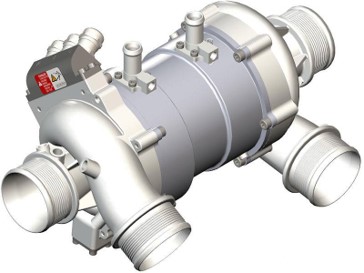
Im Projekt ARIEL untersuchtes Aufladesystem für PEM Brennstoffzellen. Quelle
Im Projekt „REZEBT“ wurde wiederum ein Rezirkulationsgebläse entwickelt, welches ungenutzten Wasserstoff vom Austritt der Brennstoffzelle zum Eintritt zurück befördert. Dadurch wird der Wasserstoffbedarf reduziert und sowohl die Lebensdauer als auch die Effizienz der Brennstoffzelle deutlich erhöht. Die PEM-Brennstoffzellen sollen in der Leistungsklasse 80 – 200kW elektrischer Leistung eingesetzt werden. Der Hauptanwendungsfall ist daher im Pkw- und Schwerlastverkehr – aber auch auf Schienen-, Maritime- und Luftfahrtanwendungen ist das Wissen übertragbar.
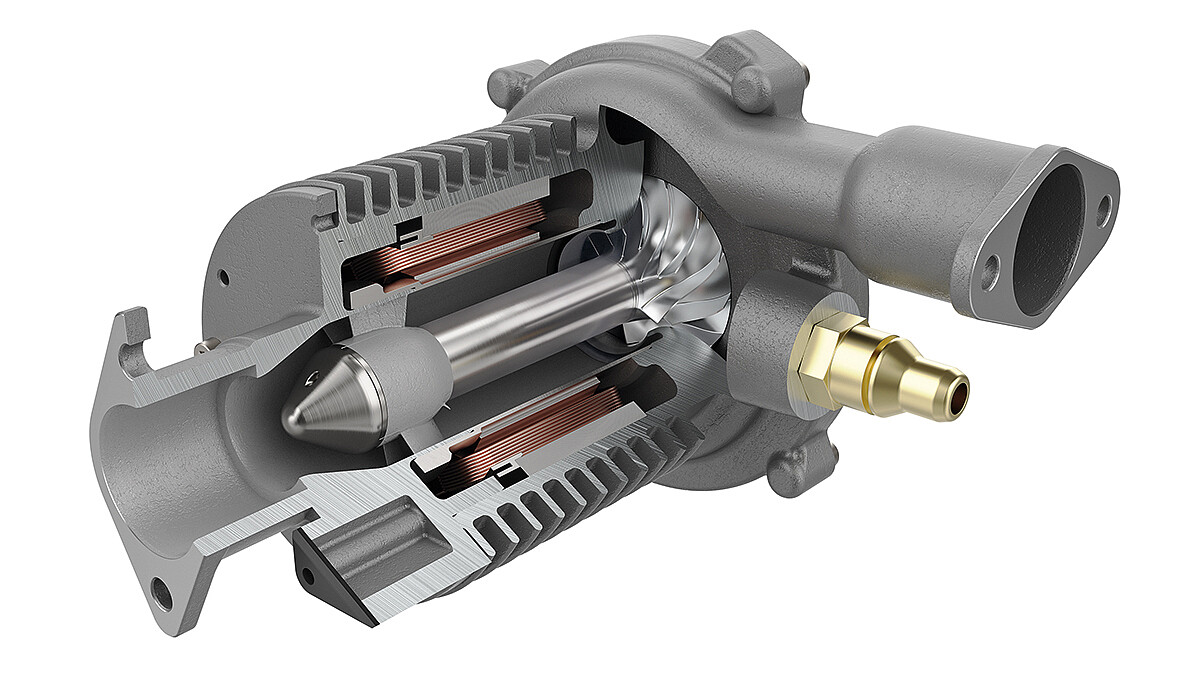
REZEBT: Neuartiges Wasserstoff-Rezirkulations-Gebläse zur Effizienzsteigerung von Brennstoffzellen, Quelle
Im Exzellenzcluster SE²A (EXC 2163) wird das bisher generierte Wissen angewendet und erweitert, um den Einsatz von PEM-Brennstoffzellen auch in der Luftfahrt zu ermöglichen. Die Herausforderungen, welche der niedrige Umgebungsdruck bei großen Flughöhen mit sich bringt, werden durch innovative Verdichterkonzepte bewältigt. So werden z.B. Mechanismen der aktiven Strömungsbeeinflussung durch Lufteinblasung und Grenzschichtabsaugung untersucht und perspektivisch mit gezielter Befeuchtung und Kühlung der Gasströmung kombiniert.
Wissenschaftlicher Nachwuchs kann wichtige Erfahrungen sammeln
Um auch den wissenschaftlichen Nachwuchs im Umgang mit Wasserstoff zu schulen und wichtige Erfahrungen sammeln zu lassen, begleitet das TFD zudem ein Team von Studierenden beim Aufbau eines wasserstoffbetriebenen Multikopters. In dem von der Region Hannover geförderten Projekt wird ein Multikopter mit einem Durchmesser von über 2 Metern konstruiert und erprobt, welcher eine Abflugmasse von fast 25kg hat. Durch den Einsatz von Wasserstoff erreicht der Multikopter längere Flugzeiten, als mit konventionellen Lithium-Ionen Akkus derzeit möglich sind. Weitere Informationen dazu finden sich hier und hier.
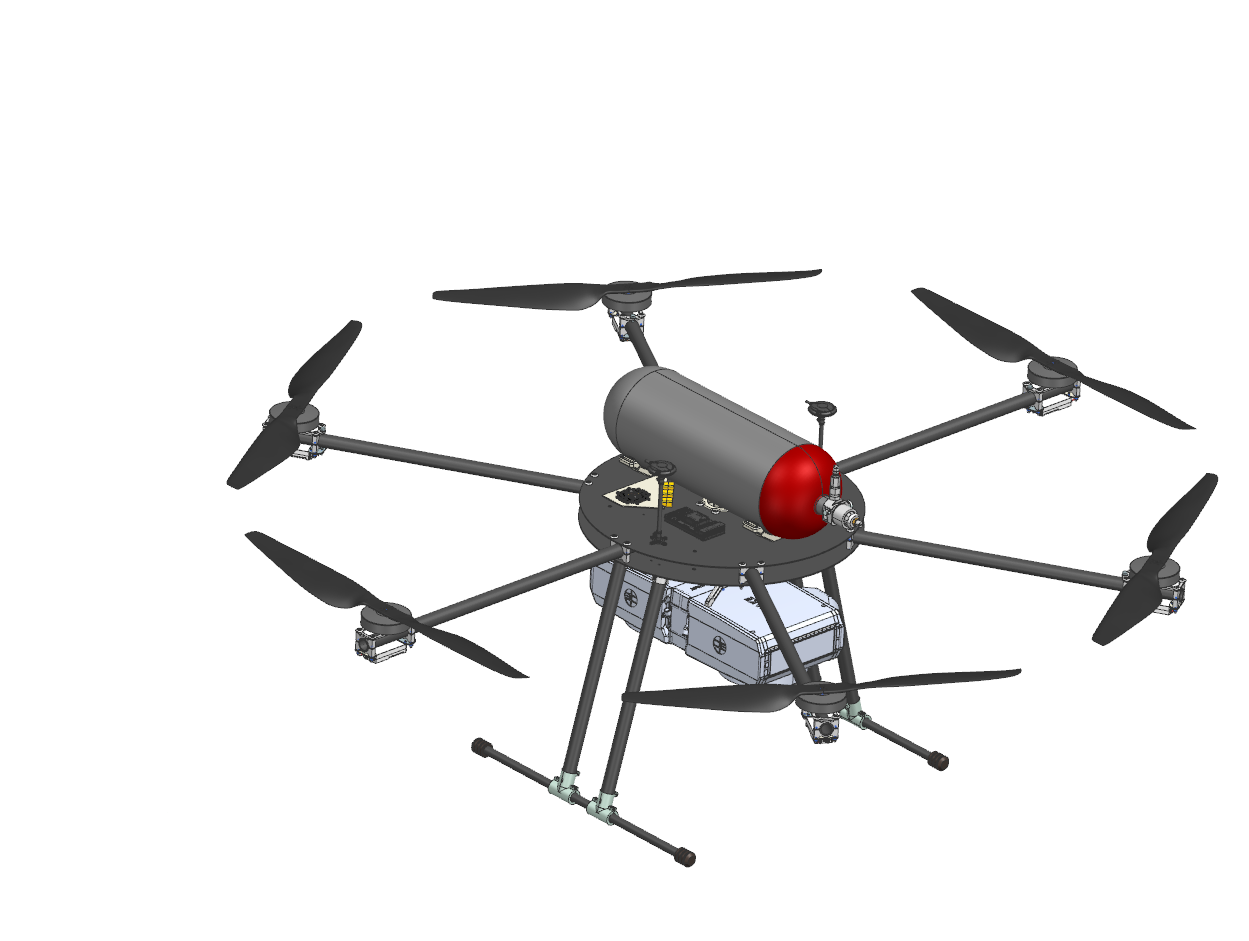
Konstruktiver Entwurf des Multikopters, welcher mit einer Brennstoffzelle mit einer Leistung von 2,4 kW betrieben wird.
Mehr zu diesen und weiteren Wasserstoff-Forschungsprojekten des Instituts:
Bleiben Sie informiert – mit unserem Newsletter „NWN direkt…“
Sie möchten über diese und andere spannende Wasserstoff-Projekte aus Niedersachsen informiert bleiben? Dann melden Sie sich bei unserem Newsletter an!