Hydrogen drying by absorption

Hydrogen drying by absorption

PROJECTS


©UniperSource: Bilfinger

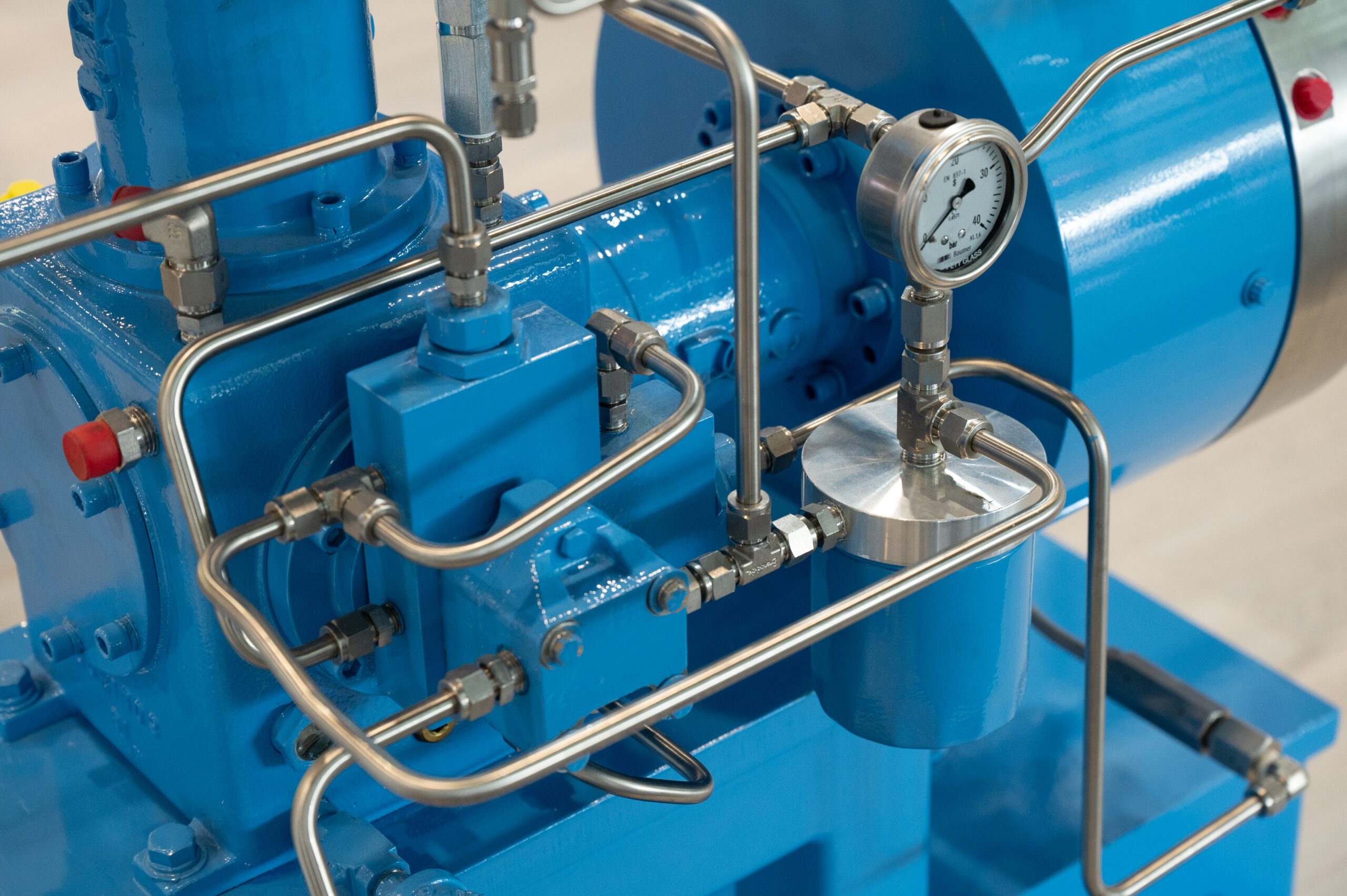
Bilfinger's hydrogen drying plant will enable large-scale hydrogen treatment.

Decentralized hydrogen drying by absorption

The storage of green hydrogen is a central instrument to ensure the security of supply with renewable energies. Cavern storage facilities can offer suitable storage options - especially in Lower Saxony. However, in order to be able to convert the hydrogen back into electricity or feed it from the caverns into the pipeline network, it must first be dried. In this connection, Bilfinger is currently developing a demonstration plant in Cloppenburg in which the hydrogen is freed from moisture by absorption. This so-called "absorption drying" is already being implemented on a large scale for natural gas for gas storage - and is now also to be used for drying large quantities of hydrogen.

News (13.12.2023): Bilfinger supports Uniper with hydrogen storage project in Krummhörn

Uniper is currently investigating the underground storage of hydrogen in a salt cavern in Krummhörn, Lower Saxony. To this end, the construction and operation of a hydrogen test cavern (3,000 m³) for the underground storage of hydrogen is being driven forward.

Bilfinger will support Uniper with engineering, procurement and construction management (EPCm) services for the above-ground plant technology of the hydrogen cavern. The H2DRY technology will also be used for hydrogen drying. Learn more


News (26.05.2023): Hydrogen storage project reaches next phase: Bilfinger's H2dry plant to be built at EWE gas storage site in Rüdersdorf

Bilfinger has developed a demonstration plant in Cloppenburg in which the hydrogen is freed from moisture by absorption.

The so-called "H2dry system" has now been delivered to EWE AG's gas storage site in Rüdersdorf near Berlin, where the storage of hydrogen in underground caverns is being tested as an example. It should be possible to transfer the findings to caverns with 1,000 times the volume. Learn more

The drying process developed in the project enables efficient and large-scale hydrogen treatment, which is essential for the storage and subsequent grid feed-in of green hydrogen. Since the technology has already been tested in the context of natural gas drying, the plant can also be used to dry large quantities of hydrogen cost-effectively, which are necessary for the development of the hydrogen economy. After storage - for example from caverns - the hydrogen is dried in the absorption drying process using a suitable scrubbing liquid and can then either be used to generate electricity or fed into the transport network. The plant should enable hydrogen to contribute to the energy supply in a similarly flexible way as natural gas.

The joint project of Bilfinger Engineering & Maintenance GmbH and the Institute of Thermodynamics at Leibniz Universität Hannover is funded by the state of Lower Saxony and is an important part of the energy transition, as Lower Saxony's Environment Minister Olaf Lies emphasizes: "The implementation of this project is a major step for the energy transition. Decentralized hydrogen drying by absorption for gas storage and grid injection, is an essential step for the hydrogen economy. With this technology, hydrogen can be treated economically on a large scale and this enables the integration of renewable energies into our energy system. For example, hydrogen produced using wind and solar power, or hydrogen soon to be stored in caverns, can be fed into the transportation grid."

After production at Bilfinger Engineering & Maintenance GmbH in Cloppenburg, Lower Saxony, a test phase and demonstration operation will follow in early 2023 in Rüdersdorf in Brandenburg, where EWE Gasspeicher GmbH is currently investigating a salt cavern as a potential storage site for hydrogen as part of the HyCAVmobil project.

More about the project

Project participants

Bilfinger is an internationally active industrial services provider. The aim of the Group's activities is to increase the efficiency of plants in the process industry, ensure their availability, reduce emissions and lower maintenance costs. Bilfinger offers services in various areas, from consulting, engineering, manufacturing, assembly and maintenance to environmental technologies and digital applications.

Bilfinger Engineering & Maintenance GmbH is part of the international Bilfinger Group and is active in industrial services. More than 3,000 employees plan and monitor plants in the process industry in the chemical, petrochemical and pharmaceutical sectors, among others.

The Gottfried Wilhelm Leibniz Universität Hannover is Lower Saxony's largest university with around 30,000 students. The Institute of Thermodynamics represents technical thermodynamics in the Faculty of Mechanical Engineering at Leibniz Universität Hannover in teaching and research.


Stay informed - with our newsletter "NWN direkt..."

You want to stay informed about these and other exciting hydrogen projects from Lower Saxony? Then sign up for our newsletter!

    H2Move (abgeschlossen)

    H2Move (abgeschlossen)

    PROJECTS

    Hydrogen economySource: Wintershall Dea

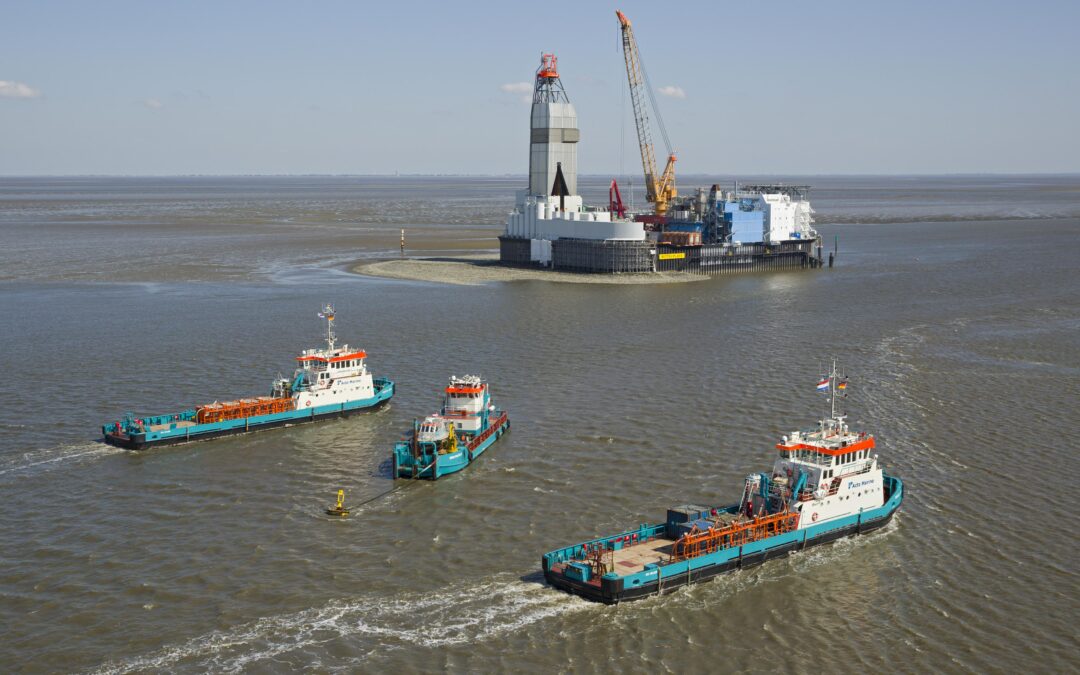
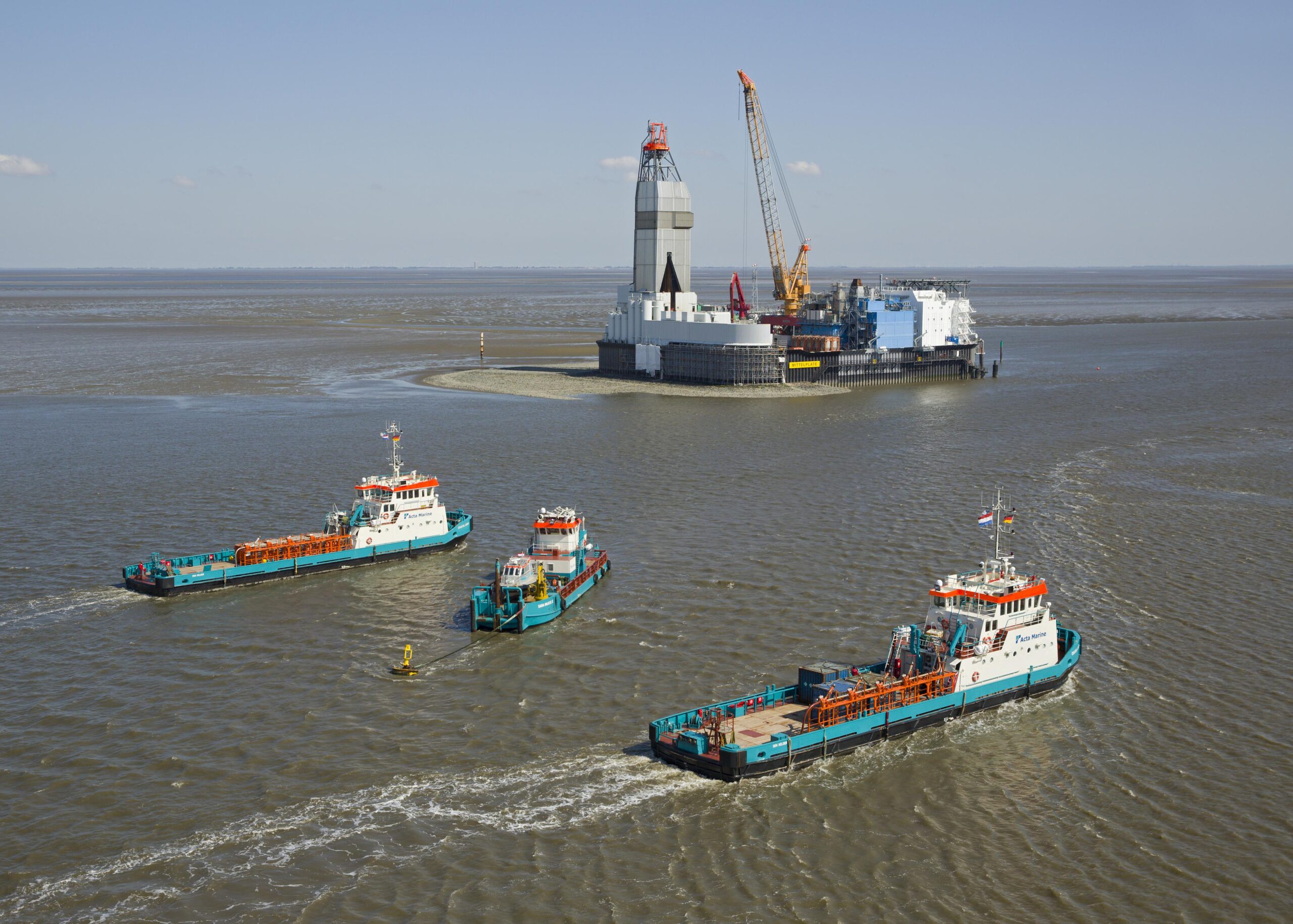
    The Mittelplate drilling platform with supply ships. 

    H2Move (abgeschlossen)

    The Mittelplate oil field is the most productive oil field in Germany and has been operated by Wintershall Dea for 35 years. The field is located in the Schleswig-Holstein Wadden Sea, which is why it is planned to operate it in the most environmentally friendly way possible. In the H2Move project, the Mittelplate Drilling and Production Island's supply ships are to be converted to hydrogen hybrid drives. The hydrogen required for this is to be produced in aCO2-neutral manner in Cuxhaven.

    News (15.11.2023): 2-megawatt electrolyzer now producing green hydrogen for shipping

    On November 15, a 2-megawatt electrolysis plant was put into operation in Cuxhaven, which is now producing green hydrogen for shipping. The green hydrogen is to be used in the H2Move project, as part of which supply vessels on the Mittelplate drilling and production island will be converted to hydrogen hybrid propulsion. Turneo Managing Director Jochen Kaufholt, Tobias Moldenhauer (EWE), Robert Frimpong (Wintershall Dea Deutschland), Cuxhaven's Lord Mayor Uwe Santjer and Lower Saxony's Minister of Economic Affairs Olaf Lies were among those present at the official commissioning of the electrolysis plant and the first converted supply vessel Coastal Liberty. Learn more

    News (14.09.2023): Electrolysis plant is in assembly/commissioning!

    The 2 MW electrolysis plant was delivered to Cuxhaven just under a month ago. Following successful installation and commissioning, it will be possible to achieve a production capacity of up to 860 kg H2/day. At the filling station, which has also been installed, the hydrogen will be filled into bundles of cylinders and transported onto ships, thus protecting the Wadden Sea with the help of a fuel cell.

    An electrolysis plant with a capacity of 2 megawatts is currently being built in Cuxhaven for the production of green hydrogen. This is to be used by the supply ships on Mittelplate Drilling and Production Island. In addition, storage tanks with different pressure levels are being built in Cuxhaven to enable the refueling processes to be carried out as quickly as possible.

    Once the plant has been completed, it is planned to transport the hydrogen produced in Cuxhaven to the Mittelplate ships in so-called tank containers under a pressure of up to 350 bar. The hydrogen will then be fed from the containers to a fuel cell, which will generate electricity and ultimately drive the electric motor of the Mittelplate vessels.

    According to Wintershall Dea, the four supply vessels in the Mittelplate fleet cover a combined distance of about 12,500 nautical miles annually. The first supply vessel to be converted is the Coastal Liberty. This ship alone consumes around 275,000 liters of diesel per year and has the potential to save up to 700 tons ofCO2 annually.

    The development and implementation of the onshore supply infrastructure is being implemented by Turneo GmbH, a joint venture between Hamburg-based Karlsson GmbH and EWE Gasspeicher GmbH from Oldenburg. The company EnTec Industrial Services GmbH had previously successfully completed a feasibility study in Cuxhaven. The project will ultimately also lay the foundation for the development of a regional hydrogen infrastructure in Cuxhaven.

    More about the project can be found here.


    About Wintershall Dea

    Wintershall Dea explores for and produces oil and natural gas worldwide. The company has been producing crude oil at the Mittelplate site for more than 30 years. Increasingly, however, the company is also active in the fields of hydrogen and carbon capture and storage (CCS).

    Logo © Wintershall Dea

    Green Wilhelmshaven

    Green Wilhelmshaven

    PROJECTS

    Green Wilhelmshaven

    According to the National Hydrogen Strategy, German hydrogen demand is to be met by a combination of in-house production and the import of hydrogen from other countries. In the Green Wilhelmshaven project, this idea is taken up by enabling the import of hydrogen by means of ammonia on a large scale, but at the same time also producing green hydrogen by electrolysis on site. This will build up capacities that together could cover 10-20 % of the hydrogen demand for the whole of Germany in 2030.

    News (23.04.2024): Salzgitter AG and Uniper SE sign preliminary agreement for the supply and purchase of green hydrogen

    Salzgitter AG and Uniper announced today that the two companies have signed a preliminary agreement for the supply and purchase of green hydrogen. This involves the delivery of up to 20,000 tons of green hydrogen per year to Salzgitter; according to current plans, the delivery could take place from 2028. The green hydrogen is to be produced in a 200 megawatt electrolyser on the site of Uniper's former hard coal-fired power plant in Wilhelmshaven. Read more

    News (06.09.2023): Solar park in Wilhelmshaven (17 MWp) to enable production of green hydrogen

    Uniper is currently building a solar park with a capacity of 17 MWp in Wilhelmshaven. The park is to be connected to the existing grid infrastructure at a Uniper site, which will also enable the production of green hydrogen at the site. The solar park thus joins the other activities in the "Green Wilhelmshaven" project. Learn more

    Sub-project: "Green Wilhelmshaven Terminal" 

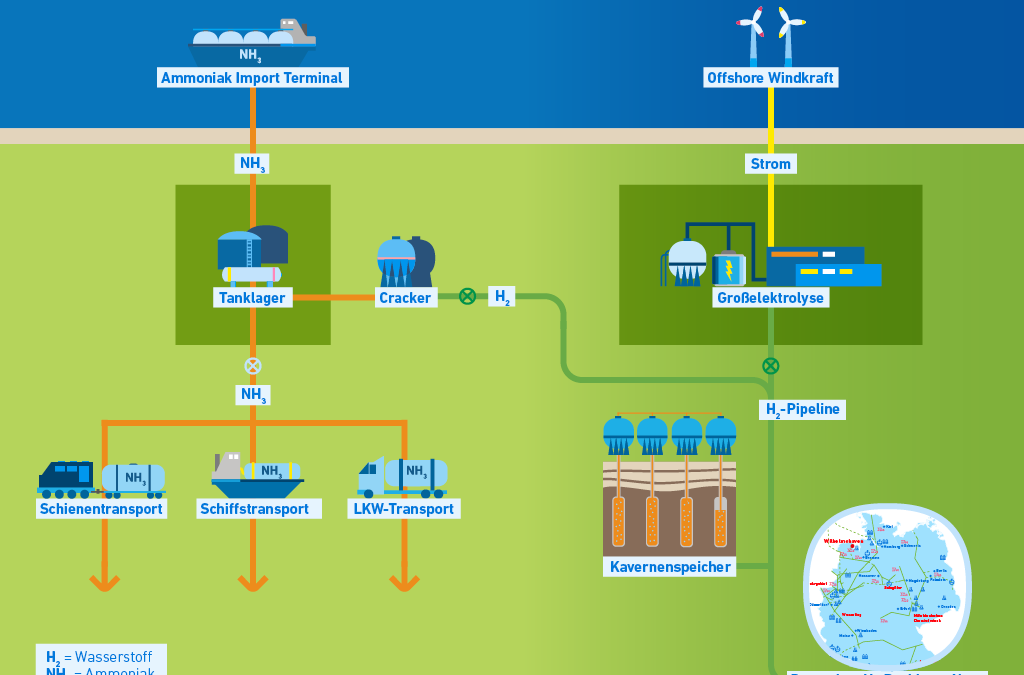
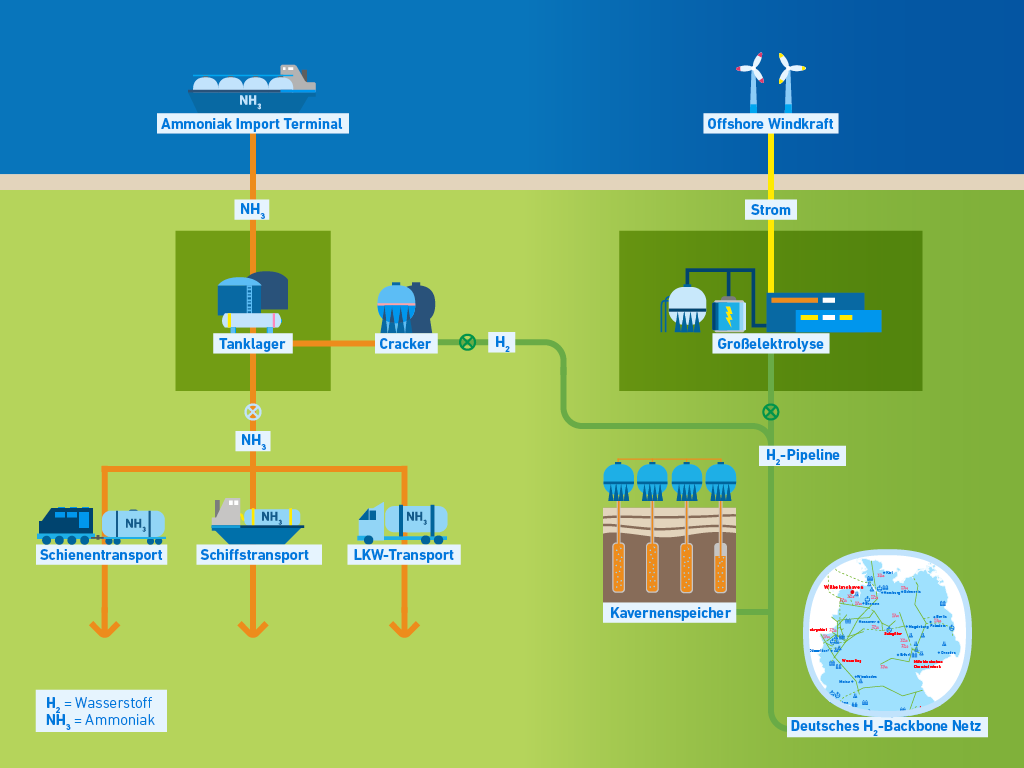
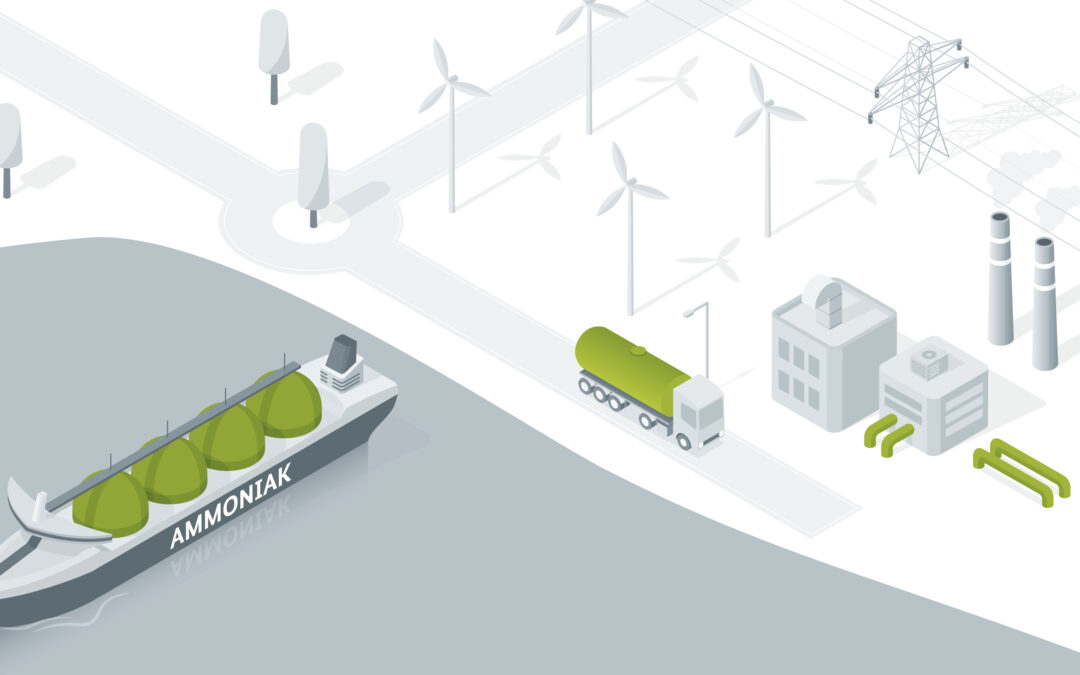
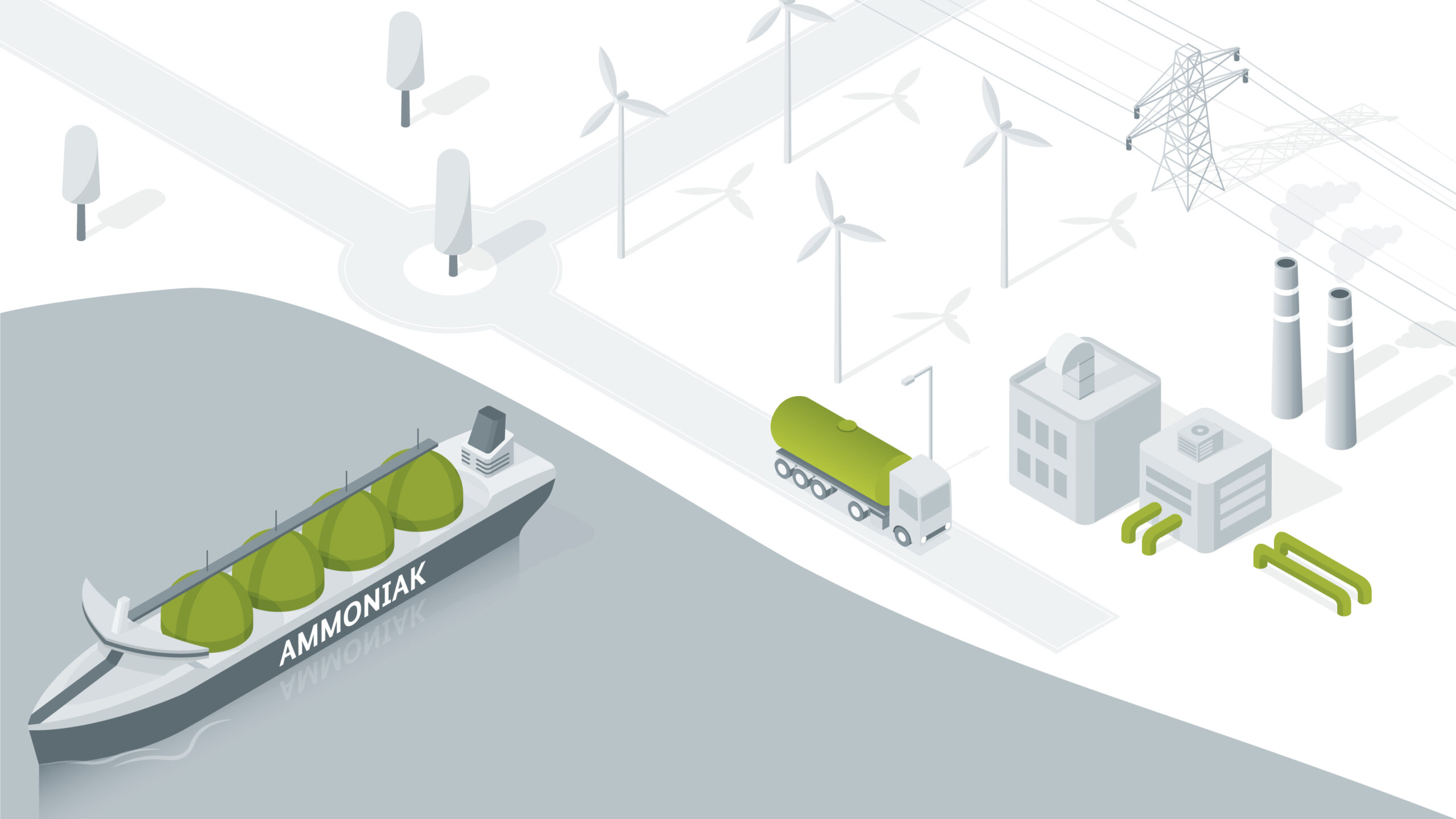
    At the heart of Uniper's project is an import terminal for green ammonia in Wilhelmshaven - including a so-called "ammonia cracker" that enables the conversion of ammonia into green hydrogen and nitrogen. Green ammonia can be used well to transport hydrogen, as it has a high energy density as well as good storability.

    Before the green ammonia can be converted into hydrogen in Germany, however, it must first be produced in the exporting country by catalytic synthesis from nitrogen and green hydrogen. Then, due to its good transportability, it can be shipped, for example, by ship to Wilhelmshaven and finally converted back into green hydrogen in the ammonia cracker (in the NH3 cracking plant). However, the production of the ammonia before transport and the reconversion to hydrogen in Germany mean losses that reduce the overall efficiency. Due to its good transport properties, however, the green ammonia can make a decisive contribution to significantly increasing the security of supply of green hydrogen. The plant in Wilhelmshaven is to be the first scaled-up plant of its kind in Germany.

    Source: Uniper

    Sub-project: "Green Wilhelmshaven Electrolyser"

    In addition, an electrolysis plant of around one gigawatt is planned in the "Green Wilhelmshaven" project. The green hydrogen produced will be used in particular to supply local industry, but can also be fed into the grid. Together with the hydrogen production in the "ammonia cracker", according to plans, 300,000 tons of hydrogen can eventually be produced - which corresponds to around 10-20 % of Germany's planned hydrogen demand in 2030.

    In the "Green Wilhelmshaven" project, the region's infrastructural advantages can also be exploited, since the salt caverns in Etzel or Krummhörn enable the large-scale storage of hydrogen.

    More about the project can be found here.

    About Uniper

    Uniper is an international energy company with around 11,500 employees in more than 40 countries. The company plans to become CO2-neutral in European power generation by 2035. With around 33 gigawatts of installed capacity, Uniper is one of the world's largest power producers.

    © Uniper

    Stay informed - with our newsletter "NWN direkt..."

    You want to stay informed about these and other exciting hydrogen projects from Lower Saxony? Then sign up for our newsletter!

      Qualification of metallic materials in a hydrogen atmosphere under cyclic loads

      Qualification of metallic materials in a hydrogen atmosphere under cyclic loads

      PROJECTS

      ©SEH/creanovo - motion & media design GmbHSource: NWN/Rainer Jensen

      When transporting hydrogen, attention must be paid to the material quality of the materials.

      Qualification of metallic materials in a hydrogen atmosphere under cyclic loads

      The corresponding hydrogen infrastructure is of central importance for the successful ramp-up of the hydrogen economy. This is because the transformation to a hydrogen economy will only succeed if hydrogen can be transported safely from the production and import centers in the north to the consumer centers in the south. In principle, the conditions in Germany are very good due to the well-developed gas network, but hydrogen can have a negative impact on the strength and brittleness of metallic materials, particularly at the connection points of the pipelines. To prevent this, Hartmann Valves GmbH, the German Institute of Rubber Technology and the Institute of Materials Science (IW - Leibniz Universität Hannover) are working on a project funded by the state of Lower Saxony to develop a composite material that is resistant to embrittlement and will enable a permanent seal.

      With a length of 500,000 kilometers and numerous gas storage facilities, the gas pipeline network in Germany offers enormous potential for storing hydrogen produced from renewable sources. It is therefore obvious that the existing infrastructure should continue to be used as part of the energy transition and be converted to hydrogen.

      "In Lower Saxony in particular, we have the best conditions for developing a sustainable hydrogen infrastructure with the cavern storage facilities and import opportunities on the coast. We want to leverage this potential by converting existing gas infrastructure to run on climate-friendly hydrogen"

      Christian Meyer

      Lower Saxony Minister for the Environment, Energy and Climate Protection

      However, the mechanical material properties of the metals used - especially at the joints of the pipes - can be reduced when hydrogen is passed through. This can ultimately lead to material failure, which must be ruled out for safety-relevant infrastructure. Materials that are resistant to embrittlement are therefore required, particularly for the so-called "flange connections", which connect the individual components and pipes of the natural gas network.

      It is precisely these materials that are being developed as part of the project "Qualification of metallic materials in hydrogen atmospheres under cyclic loads". "In the project, we want to develop a hydrogen-tight flexible coating that remains reliably tight even at higher thermal expansions and vibrations of the hydrogen transport system. This should prevent premature ageing of the steel as a result of hydrogen embrittlement," says Christian Hartmann, Managing Director of project partner Hartmann Valves GmbH.

      To this end, the project is pursuing various sub-goals. Firstly, sub-goal 1 is to "qualify" the metallic materials, i.e. test their suitability for hydrogen applications under cyclic stresses. This is intended to develop limit values for the maximum stress.

      In sub-objective 2, a dimensionally stable but elastic plastic(nanocomposite) is being developed and tested that can withstand cyclic loading due to its elasticity. A filler is also being developed so that hydrogen cannot penetrate the material. The coating should ultimately ensure that contact between the critical flange connection and the so-called "hydrogen atmosphere" within the pipe is reduced. "The newly developed material is highly impermeable to small molecules such as hydrogen. We achieve this impermeability through specially developed manufacturing processes and the use of suitable innovative materials that have a high barrier effect against hydrogen," says Prof. Ulrich Giese from the German Institute of Rubber Technology, explaining the special features of the project.

      In order for the coating process to be successful, sub-objective 3 aims to enable adhesion between the plastic (from sub-objective 2) and the metal on the inside of the fittings. Finally, a fatigue test rig is to be developed in sub-objective 4, which maps cyclical mechanical influences on the material and at the same time takes into account the effect of hydrogen on the material. This will ensure that the newly developed components can be used in existing infrastructure.

      Prof. Hans Jürgen Maier from the Institute of Materials Science at Leibniz University Hannover emphasizes the importance of the project for the ramp-up of the hydrogen economy: "With this project, we want to contribute to increasing safety in the storage and transport of hydrogen. In the future, the knowledge gained can serve as a basis for repurposing existing components for hydrogen applications and thus contribute to the development of a safe and resistant hydrogen infrastructure"

      The project is being carried out by Hartmann Valves GmbH, the German Institute of Rubber Technology and the Institute of Materials Science (IW) at Leibniz Universität Hannover and is due to be completed by fall 2025. The state of Lower Saxony is funding the project with almost 800,000 euros.

      Stay informed - with our newsletter "NWN direkt..."

      You want to stay informed about these and other exciting hydrogen projects from Lower Saxony? Then sign up for our newsletter!

        TransHyDE

        TransHyDE

        PROJECTS

        TransHyDE - Development of a hydrogen transport infrastructure

        To meet Germany's demand for green hydrogen and implement the energy transition, large quantities of hydrogen are needed - a not inconsiderable proportion of which must be imported. The hydrogen lead project TransHyDE, which is funded by the German Federal Ministry of Education and Research (BMBF), therefore aims to further develop transport options in a way that is open to technology and also to create appropriate standards in order to thereby enable the development of the hydrogen infrastructure and support the market ramp-up.

        News (14.08.2024): Successful commissioning of a pilot hydrogen network!

        TransHyDE is testing five technologies on 130 meters of new and rededicated hydrogen pipelines. A mini-hydrogen network was put into operation on RWE's premises in Lingen. Further information here.

        News (13.03.2024): New, more efficient catalytic converter has been developed!

        In the project, researchers have developed a new catalyst that can be produced more cost-effectively. The recovery of H2 from ammonia can thus take place much more efficiently. Further information here.

        Our site presents numerous projects that focus on the transport of hydrogen. There are very different approaches, be it transport in high-pressure containers, in existing gas pipelines or by means of green ammonia or liquid organic hydrogen carriers (LOHC). This technological diversity is to be further investigated as part of the TransHyDE hydrogen lead project - because there is still a great need for research in the fields of action mentioned. In particular, there are currently no uniform regulations in the area of standardization, e.g. standards or safety regulations - which is currently still hindering the market ramp-up. New standards, norms and certifications are therefore needed so that the above-mentioned transport technologies can be quickly integrated into the energy system, and a separate work package within TransHyDE is dedicated to this.

        TransHyDE is being implemented in various sub-projects, in which the various transport options are being looked at in more detail, both in practice and from a research perspective.

        Source: Project Management Jülich on behalf of the BMBF

        The implementation takes place in subprojects (please fold out for further information):

        "Mukran"

        An innovative high-pressure spherical hydrogen storage system is being developed at Mukran Port on the island of Rügen. This should be able to be used on the high seas in the immediate vicinity of offshore wind and electrolysis plants from the H2Mare project. There, green hydrogen is generated by means of wind energy, which is to be stored temporarily in the spherical storage system.

        "GET H2"

        To ensure that hydrogen is available nationwide, the GET H2 project is investigating the use of former natural gas pipelines for hydrogen transport. Currently, there is a lack of norms and monitoring standards for the conversion of natural gas pipelines, which is why GET H2 is establishing a test environment in which material and safety questions can be answered.

        "Campfire"

        The Campfire project will investigate the potential of ammonia for hydrogen transport, focusing in particular on the recovery of hydrogen from ammonia. The aim here is in particular to improve the efficiency with which the hydrogen is re-released.

        "Heligoland"

        In the Helgoland project, a hydrogen logistics chain is being established over land and sea. Via pipeline, the green hydrogen will be brought from the offshore plant of the lead project H2Mare to the island of Helgoland, where it will be bonded with LOHC for further transport. Subsequently, the bonded hydrogen can be shipped using existing infrastructure in a similar way to oil and, in turn, dissolved from the LOHC and made usable in a dehydrogenation plant in the port of Hamburg.

        "Research Alliances"

        A total of five alliances of research institutions support the projects with scientific findings. This involves, for example, materials and component research, operating simulations, or safety-related and ecological issues. The state of knowledge and current recommendations for action are recorded in a roadmap and made available to all project partners.

        Further information

        Three companies from Lower Saxony are participating in the project, which is funded by the German Federal Ministry of Education and Research (BMBF). These include ROSEN GmbH, Salzgitter Mannesmann Forschung GmbH and Inherent Solutions Consult GmbH & Co. KG

        More about the project you can find here.

        Stay informed - with our newsletter "NWN direkt..."

        You want to stay informed about these and other exciting hydrogen projects from Lower Saxony? Then sign up for our newsletter!

          Wilhelmshaven Green Energy Hub

          Wilhelmshaven Green Energy Hub

          PROJECTS

          Source: Tree Energy Solution

          Wilhelmshaven Green Energy Hub

          The import of green hydrogen via hydrogen terminals is a crucial prerequisite for the development of a hydrogen economy in Germany. The coast of Lower Saxony with its deep water port in Wilhelmshaven offers ideal conditions for this. Tree Energy Solution (TES) has therefore decided to build a hydrogen terminal in Wilhelmshaven that will enable the import of green hydrogen on a large scale. The planned terminal comprises six berths and a total of ten tanks with a storage capacity of 2,000,000 cubic meters. According to plans, the terminal will be able to import up to 250 TWh of green gases per year in the future and produce more than 5 million metric tons of hydrogen from them - equivalent to one tenth of Germany's total annual primary energy demand.

          News (11/28/2022): TES and EWE plan to build 500 MW electrolyzer

          As TES and EWE announced at the end of November, a 500 MW electrolyzer is to be built as part of the project. The electrolyzer is scheduled to go into operation from 2028. The capacity of the electrolyzer is to be 500 megawatts, which is to be expanded to a total capacity of 1 gigawatt with another planned plant. 

          To meet its hydrogen needs, Germany will have to import green hydrogen from various countries in the future. This requires the appropriate infrastructure, which enables the landing, storage and transport into the hydrogen pipeline network. This is precisely what is envisaged in the Wilhelmshaven Green Energy Hub project, which is being implemented by Tree Energy Solution (TES). To this end, six ship berths are to be built in Wilhelmshaven that are "Suezmax-compatible" - so that large ships can also land in Wilhelmshaven ("Suezmax" describes a ship size that is permissible for passage through the Suez Canal when loaded).

          TES also wants to produce the green hydrogen itself - in countries with a very high supply of hydro, wind or solar power. Renewables are used for electrolysis in the producing countries to initially produce green hydrogen. After electrolysis, carbon dioxide is added to the hydrogen to produce green CH4 (methane), which can then be transported by shipping fleet to Wilhelmshaven. Here, the CH4 is converted back to hydrogen, and the resultingCO2 is captured and returned to the producing countries in a recirculation system for further use.

          Source: Tree Energy Solution

          Wilhelmshaven Green Energy Hub in the model

          From 2026, the terminal is scheduled to begin operations and thus the first import of green molecules. In this initial phase, 25 TWh of green methane per year are expected to be imported - from this, more than half a million tons of hydrogen can be produced. During the ramp-up phase starting in 2030, output will be successively increased so that eventually up to 250 TWh per year - and thus more than 5 million tons of hydrogen - can be imported or produced.

          The project intends to take advantage of the good site conditions in Wilhelmshaven and make use of the storage and transport infrastructure currently being built in Lower Saxony. Thus, a link to the underground salt cavern storage facilities in Etzel is to be established and the pipelines built and rededicated as part of the H2ercules project are to be used to enable transport to industrial consumers in the west and south of Germany. With high import volumes of up to 250 TWh, the project is expected to contribute to security of supply in Germany and the EU.

          More about the project

          About TES

          Tree Energy Solutions (TES) is a green hydrogen company that supplies industry and consumers with CO2-neutral energy - in the form of green hydrogen, green gas and green electricity. To build a network with global reach, TES is currently developing sites for the import and distribution of energy in Germany, Belgium, France, the Netherlands and the United States.

          Stay informed - with our newsletter "NWN direkt..."

          You want to stay informed about these and other exciting hydrogen projects from Lower Saxony? Then sign up for our newsletter!