Nienburg: Local hydrogen production for the mobility sector

Nienburg: Local hydrogen production for the mobility sector

PROJECTS

Source: Stadtwerke Nienburg
A self-sufficient hydrogen production facility is to be built in Nienburg.

Nienburg: Local hydrogen production for the mobility sector

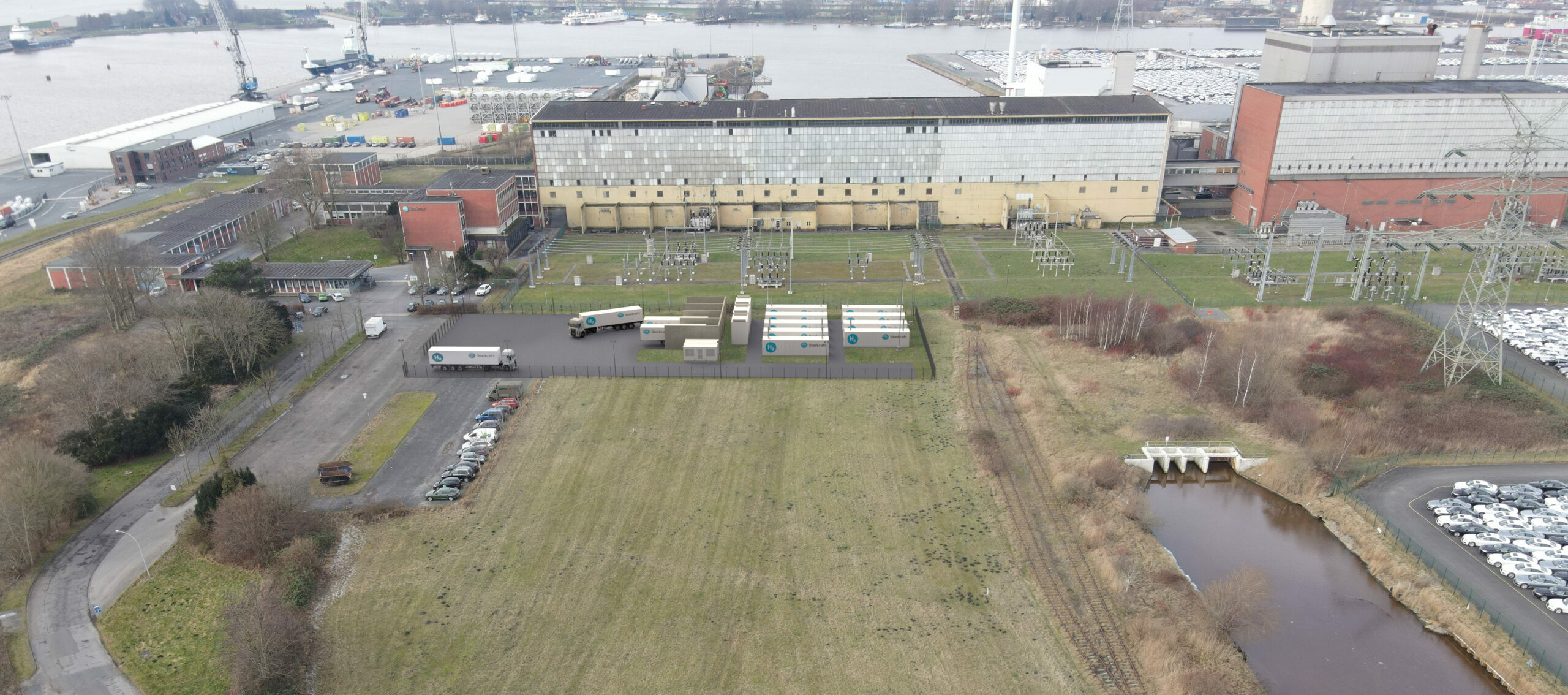
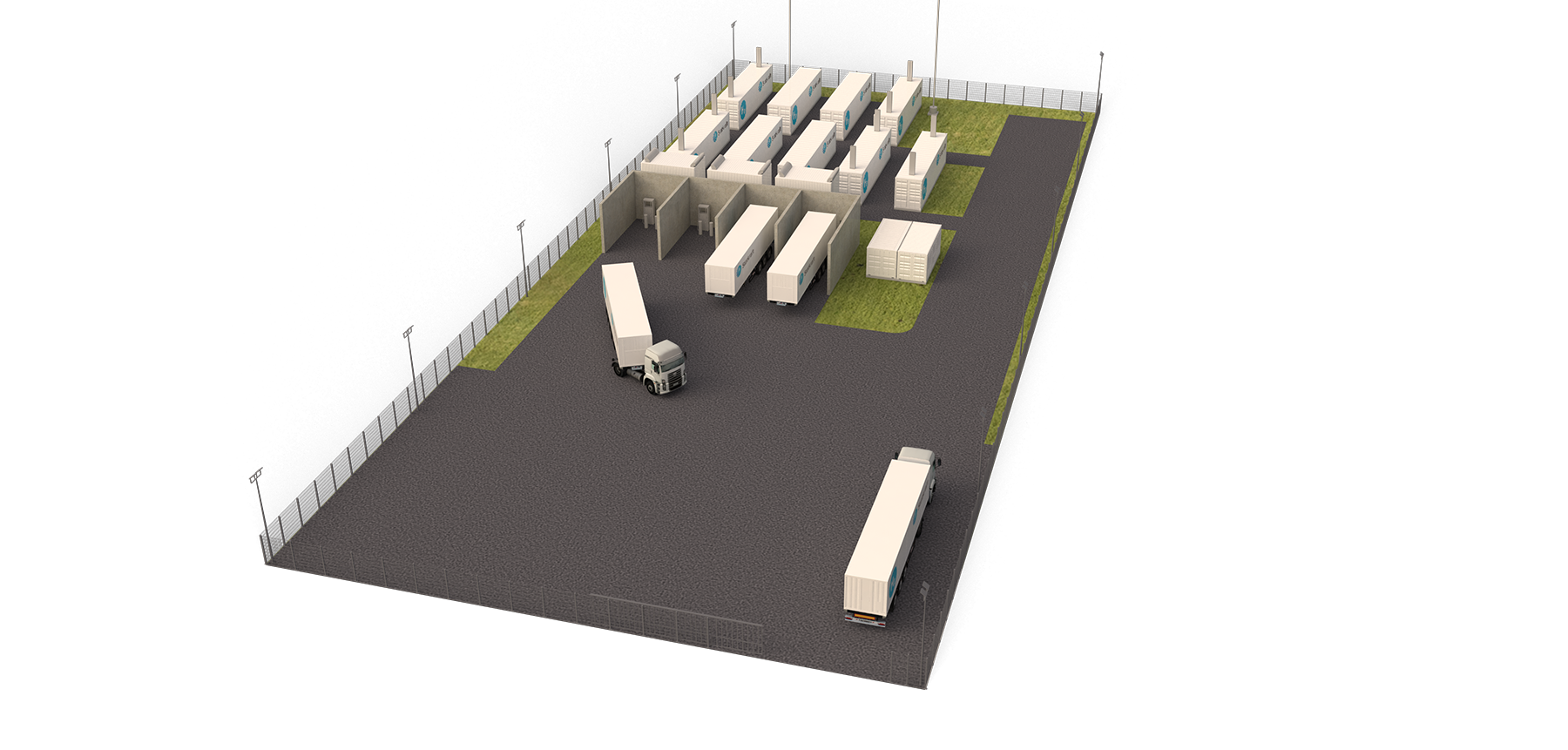
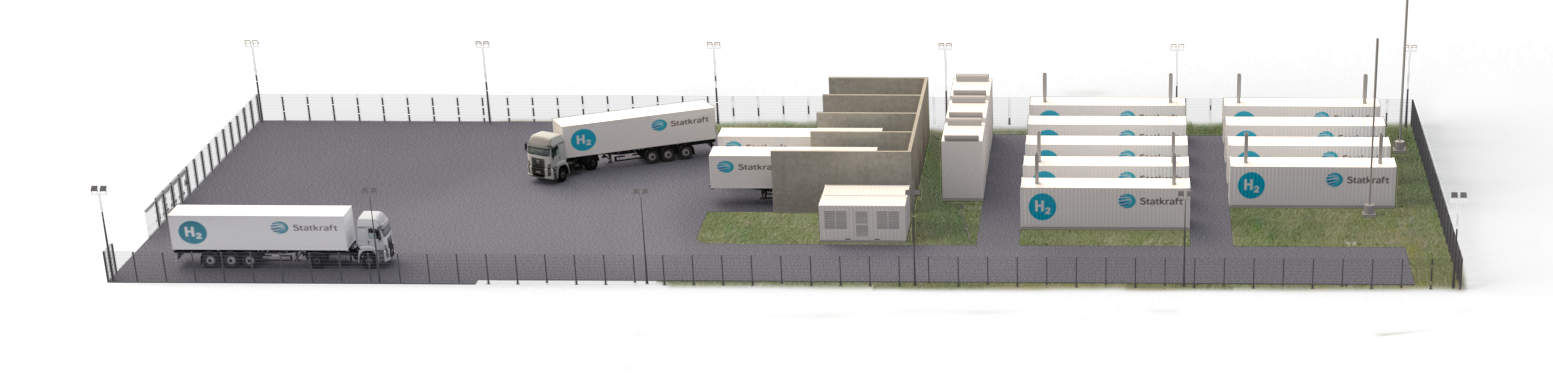
Stadtwerke Nienburg wants to establish self-sufficient hydrogen production! In particular, locally produced solar power from a 2.1 MWp PV system is to contribute to this. The green hydrogen is to be used in the mobility sector in particular. A hydrogen filling station is currently being built for this purpose, which is designed for refueling heavy goods vehicles and hydrogen buses. The Nienburg project is being funded by the state of Lower Saxony. 

A self-sufficient hydrogen production facility is currently being built in Nienburg. The hydrogen is to be produced using solar power. A ground-mounted PV system was installed on around 20,000 m² in 2023 for this purpose. Around 4,975 solar modules provide an installed PV output of 2.1 MWp . The PV system is dimensioned in such a way that the hydrogen produced is generated almost entirely with this solar power. Surplus electrical energy is fed into the public grid and marketed regionally by the municipal utility and its sales subsidiary Nienburg Energie.

Alternatively, surplus solar power could also be stored in a battery storage system for use at a later date. Wind turbines in the immediate vicinity can also supply additional renewable electricity for hydrogen production.

Source: Stadtwerke Nienburg
The solar plant in Nienburg will contribute to hydrogen production. 
The hydrogen produced in Nienburg is to be used in the mobility sector in particular, which is why a hydrogen filling station is currently being built that is designed for heavy goods vehicles and hydrogen buses (pressure of 350 bar). According to Stadtwerke Nienburg, operating buses with locally produced green hydrogen can save up to 266 tons of CO2 can be saved.

The contractor for Stadtwerke Nienburg is the company JA-Gastechnology (JAG) from Burgwedel for the hydrogen components. The PV system was also installed by a regional company, Buschmann from Twistringen. The schedule envisages that the various components for the electrolysis and the hydrogen filling station will be delivered and installed during the course of the year - which means that operations could start by the end of this year.

Source: Stadtwerke Nienburg

Further information

Further information on the project can be found here: https://www.h2-nienburg.de/

Stay informed - with our newsletter "NWN direkt..."

You want to stay informed about these and other exciting hydrogen projects from Lower Saxony? Then sign up for our newsletter!

    Clean Hydrogen Coastline
    Clean Hydrogen Coastline

    PROJECTS

    Source: EWE
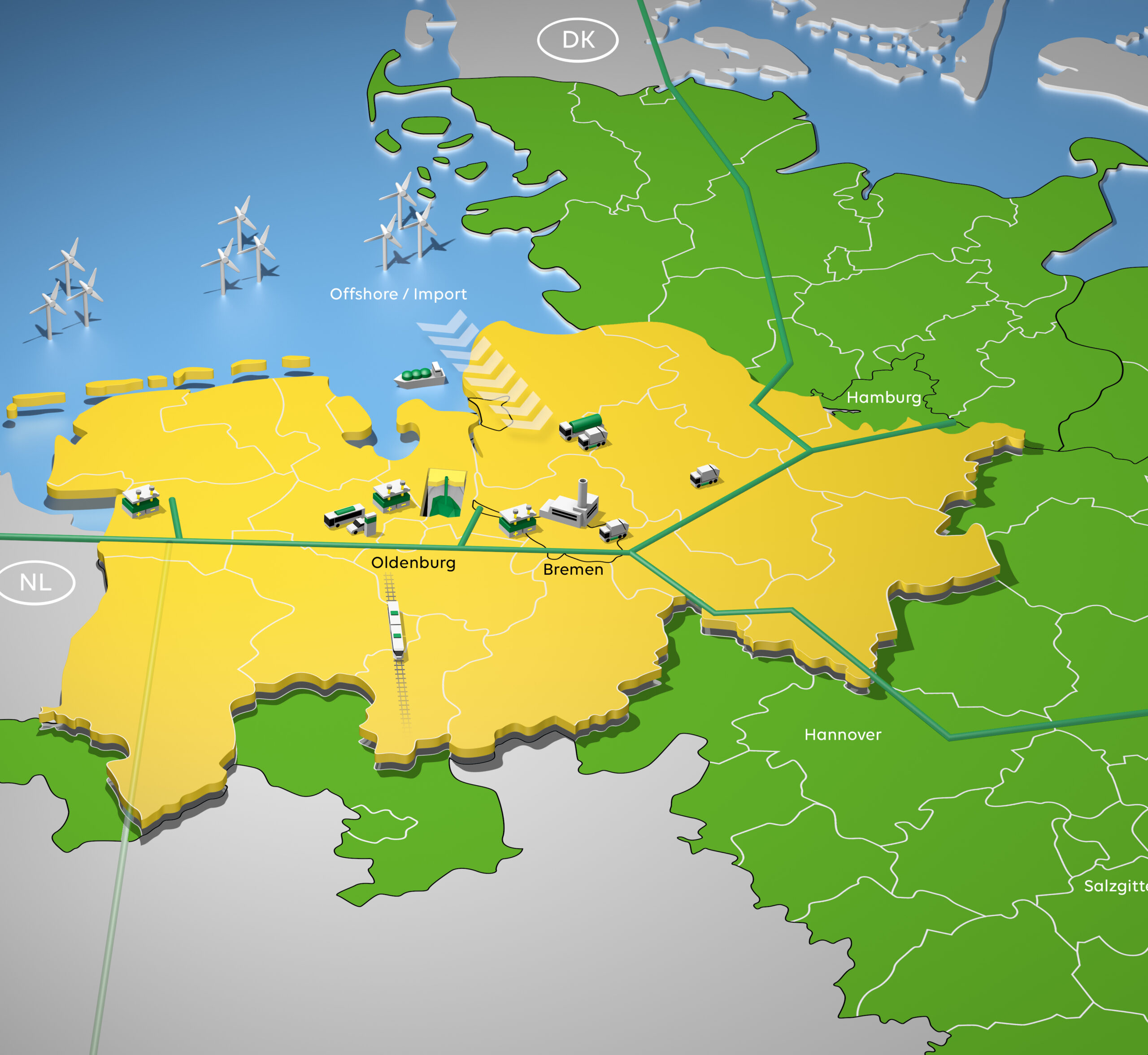
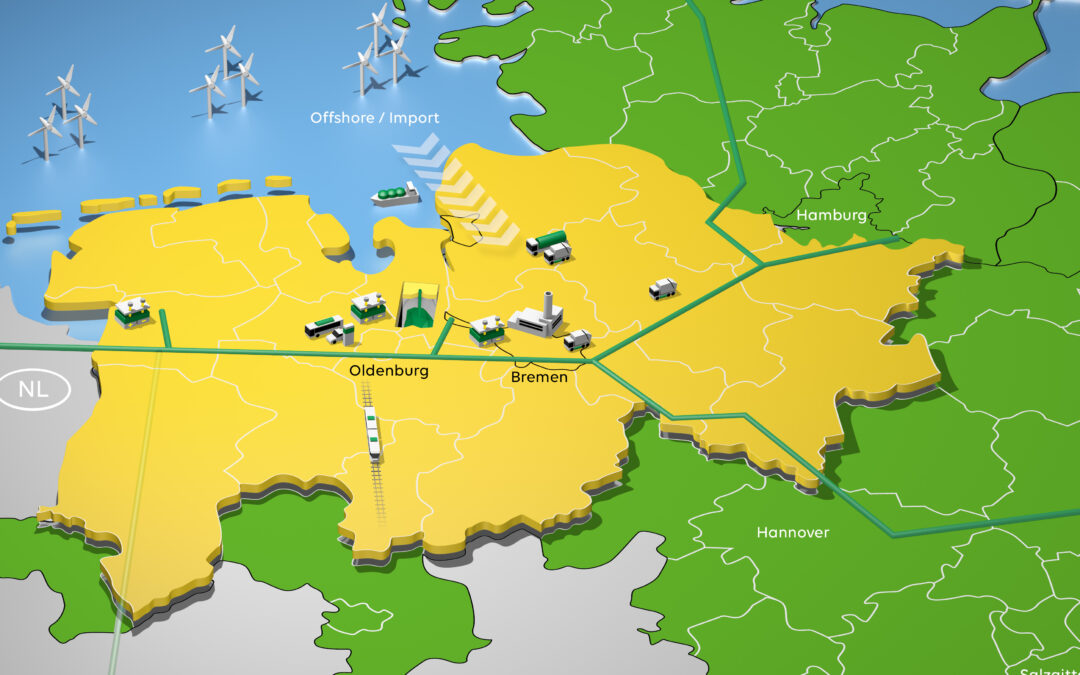
    About 400 megawatts of electrolysis capacity will be built in the Clean Hydrogen Coastline project in the Northwest region by 2026. Image source: ©EWE

    Clean Hydrogen Coastline

    The German North Sea coast is of particular importance in the development of a nationwide hydrogen economy. Due to the high supply of renewable energies, hydrogen can not only be produced in the region, but also stored, integrated into the energy system via existing electricity and gas infrastructure, or used directly on site. The "Important Project of Common European Interest" (IPCEI) "Clean Hydrogen Coastline" is intended to contribute to the development and expansion of the hydrogen economy in the Northwest region.
    News (10.06.2025): Trafos sind in Emden angekommen!

    Am 07.06. erreichten die zwei (rund 300 Tonnen schweren) Transformatoren den Emdener Hafen. Dieser Schritt ist ein weiterer wichtiger Meilenstein, damit das Projekt auf Kurs bleiben kann.  Mehr dazu. Außerdem sind die vorbereitenden Arbeiten erfolgreich gestartet. Mehr dazu.

    News (07.04.2025): Baustart wird vorbereitet!

    Vom 14. – 21.04. wird in Huntorf das Gelände aufgeschüttet, damit die Grundlage für den Bau des Wasserstoffspeichers gelegt werden kann. Mehr dazu.

    News (21.03.2025): Neuer Meilenstein erreicht!

    EWE hat den Auftrag für die Verdichter an NEUMAN & ESSER gegeben. Mehr.

    News (25.07.2024): Energy supplier EWE awards contract for large-scale hydrogen project in Emden to Siemens Energy
    The energy supplier EWE has announced that Siemens Energy will support the construction of one of Europe's largest hydrogen production plants in Emden. The entire production plant, consisting of electrolysis and the necessary peripherals - such as compressors and cooling systems - will have an average power consumption of around 320 megawatts over its lifetime. The energy technology group will supply a 280-megawatt electrolysis system as the centerpiece of the plant. The plant in Emden is scheduled to go into operation in 2027 and will then provide around 26,000 tons of green hydrogen per year for various applications. Read more
    News (15.02.2024): IPCEI projects: European Commission approves funding
    As the European Commission announced, the third IPCEI round under the title "Hy2Infra" has now been approved. This allows the member states to provide public funding of up to 6.9 billion euros. In the current round, 32 companies are involved in 33 projects - including the Clean Hydrogen Coastline project. Learn more
    News (16.01.2024): Hydrogen cooperation between EWE and ArcelorMittal Bremen
    As EWE and steel manufacturer ArcelorMittal announced yesterday, the two companies have agreed on their next hydrogen cooperation. EWE is to supply green hydrogen to Bremen to enable the decarbonization of the steel industry there. At the heart of the project is a 320-megawatt generation plant, which is to be installed in Emden and is expected to produce green hydrogen from 2028.

    The starting point for this project is the large-scale "Clean Hydrogen Coastline" project. In this project, a hydrogen economy with production, storage and transportation options is being established on the North Sea coast. The hydrogen will ultimately be used in industry - in addition to ArcelorMittal Bremen, for example, also in Salzgitter at Salzgitter AG. Learn more

    News (24.08.2023): Cooperation between EWE AG and Georgsmarienhütte GmbH!
    Grüner Stahl aus Georgsmarienhütte – EWE AG und Georgsmarienhütte GmbH geben Wasserstoff-Kooperation bekannt für eine komplett klimaneutrale Stahlherstellung ab 2039!

    From 2039, steel from Georgsmarienhütte is to be produced in a climate-neutral way. Cooperation partner EWE will supply the green hydrogen from production plants in north-west Germany.

    Lower Saxony's Minister President Stephan Weil commented: "I am delighted that EWE and Georgsmarienhütte have agreed to significantly accelerate the development of the hydrogen industry. Large quantities of renewable energy and green hydrogen are needed for the new climate-friendly processes. Lower Saxony offers unique locational advantages in these areas in particular: a lot of wind energy on land and at sea, important seaports for the import and distribution of green hydrogen and large-volume underground formations for storing hydrogen. Georgsmarienhütte in particular is taking a big step towards sustainability. The steel industry forms the basis of many value chains and will secure jobs in the long term with this lighthouse project. With this pioneering industrial transformation, EWE and GMH Gruppe will make a significant contribution to achieving Lower Saxony's, and therefore Germany's and Europe's, climate protection targets."

    More information about the cooperation.

    News (04.05.2023): EWE and Salzgitter AG want to cooperate on hydrogen!

    On May 4, 2023, Salzgitter AG and the utility company EWE signed a letter of intent in Salzgitter that provides for cooperation between the two companies in the field of hydrogen. EWE intends to produce green hydrogen and supply it to Salzgitter, which Salzgitter AG will then use for climate-friendly steel production as part of the SALCOS® project. The letter of intent was signed by the CEOs Stefan Dohler (EWE) and GUnnar Groebler (Salzgitter AG) at the Handesblatt Hydrogen Summit.

    The cooperation also means that the two major Lower Saxony projects Clean Hydrogen Coastline by EWE and SALCOS® by Salzgitter AG will be more closely networked, which Lower Saxony's Minister President Stephan Weil also welcomes: "EWE and Salzgitter AG want to cooperate closely on green hydrogen - this is very good news for Lower Saxony as an energy state. This cooperation is another milestone on the way to decarbonizing steel production. I am delighted that EWE is making a decisive contribution to Salzgitter AG's flagship SALCOS® project with the production and transportation of green hydrogen."

    Learn more

    Im IPCEI „Clean Hydrogen Coastline“ wollen die Industriepartner ArcelorMittal, EWE, Gasunie, swb und Tennet in der Region Nordwest 400 Megawatt Elektrolysekapazität bis zum Jahr 2026 aufbauen. Hierzu gibt es verschiedene Projekte, die bei der Umsetzung helfen sollen.

    • In sub-project 1 "Electrolysis East Frisia", EWE plans to build a 320-megawatt electrolysis plant in Emden and use it to produce hydrogen on an industrial scale. According to EWE, hydrogen could be produced from renewable energies in Emden as early as 2028.
    • In sub-project 2 "Electrolysis Bremen", EWE also wants to build an electrolyzer, but in the Hanseatic city of Bremen. Like the hydrogen from Emden, the green hydrogen from the 50-megawatt electrolyzer is to be used for climate-neutral steel production, among other things. There are plans to supply hydrogen to ArcelorMittal's Bremen site, Salzgitter AG and Georgsmarienhütte, for example.
    • In the third sub-project, "Huntorf storage facility", EWE is planning to connect the hydrogen infrastructure to its cavern storage facility in Huntorf. The plan is to convert an underground natural gas storage facility and above-ground facilities for hydrogen storage. EWE's HyCAVmobil research project, in which the company is storing hydrogen on a much smaller scale in cavern storage facilities in Rüdersdorf near Berlin, is expected to yield important findings.
    • As part of sub-project 4 "H2 Pipeline Infrastructure Northwest", the hydrogen infrastructure in the northwest is to be optimized. The construction and conversion of several pipeline sections will connect important hydrogen consumers and storage facilities to the future European hydrogen transport network.

    Clean Hydrogen Coastline's many links, for example with the Dutch partners, but also with projects in Hamburg and North Rhine-Westphalia, offer extensive potential for a European IPCEI. This will enable the partners to take a decisive step towards becoming an important building block of a future European hydrogen economy. The main goal of the project is to Integration of hydrogen into existing energy infrastructures.

    Partner

    ©ArcelorMittal
    ©EWE
    ©Tennet
    ArcelorMittal ist ein internationaler Stahlproduzent mit einem Produktionsvolumen von sieben Millionen Tonnen Rohstahl (2019), der deutschlandweit rund 9.000 Angestellte beschäftigt.

    Logo: © ArcelorMittal


    With approximately 9,100 employees, the EWE AG one of the largest utility companies in Germany, which focuses on the corresponding infrastructure in the hydrogen sector.

    Logo: © EWE AG

    TenneT TSO GmbH ist ein Übertragungsnetzbetreiber mit einer Netzlänge von 24.000 Kilometern und ca. 5.700 Beschäftigten.

    Logo: © TenneT TSO GmbH

    ©Gasunie Germany
    ©SWB
    The Gasunie Deutschland GmbH & Co. KG ist als Fernleitungsnetzbetreiber für ein rund 4.300 Kilometer langes Fernleitungsnetz verantwortlich.

    Logo: © Gasunie Germany

    The swb AG ist ein regionales Versorgungsunternehmen für Bremen und Bremerhaven mit rund 2.255 Beschäftigten.

    Logo: © swb AG

    Stay informed - with our newsletter "NWN direkt..."

    You want to stay informed about these and other exciting hydrogen projects from Lower Saxony? Then sign up for our newsletter!

      Sektorenkopplung für den Eigenbedarf (abgeschlossen)

      Sektorenkopplung für den Eigenbedarf (abgeschlossen)

      PROJECTS

      SEKTORENKOPPLUNG FÜR DEN EIGENBEDARF (abgeschlossen)

      Sector coupling is of central importance for a functioning hydrogen economy. The pilot project of Open Grid Europe GmbH (OGE), which is funded by the state of Lower Saxony, is now focusing on the coupling of sectors for self-consumption. The "Realbetrieb KRUH2" project involves the production, storage and use of green hydrogen at the Krummhörn site in Lower Saxony. The hydrogen is used for heat supply, as an alternative fuel for OGE's fleet of company vehicles, and for reverse power generation. The Lower Saxony Ministry for the Environment, Energy, Building and Climate Protection is supporting OGE's project with 2.81 million euros.

      News (25.07.2024): Completion and commissioning of the project in Krummhörn!

      As part of the project funded by the state of Lower Saxony, the completion and commissioning has now been celebrated! Two pressure tanks, each with a usable storage volume of 1000 Nm³, are available for storage. The heart of the plant is the 1 megawatt electrolyzer, which can produce around 18 to 19 kg of hydrogen per hour. The hydrogen produced will then be used to supply the technical operation itself, e.g. for heat supply or mobility. Read more

      News (01.10.2023): Electrolyzer arrives at the Krummhörn site!

      OGE has announced that its first electrolyzer has arrived at the Krummhörn site. The electrolyser will be able to produce 450 kg per day - at an output pressure of 20-30 bar and a system efficiency of 75%. . Read more

      "We want to show here in East Frisia how the energy transition with hydrogen can become a success," says Dr Jörg Bergmann, spokesman for the management of OGE. "What is being implemented here on a small scale in a timely manner can serve as a blueprint for a hydrogen economy throughout Germany. I am very pleased that the state of Lower Saxony is supporting us so strongly in this."

      Energy Minister Olaf Lies: "Renewable energies are at the heart of climate protection. To this end, we will consistently advance the expansion of onshore wind, offshore wind and photovoltaics. But electricity alone will not work. We need the strategic combination of electricity and gas. Without hydrogen, we will not be able to achieve the climate targets. I am pleased that OGE will show in the project how hydrogen can be used in the heat, electricity and mobility sectors. That is sector coupling and that is the future of our energy world. It's good that we have companies here that want to lead the way in the hydrogen economy. We are happy to support them in this."

      Special features of the project:

      Innovative hydrogen cycle

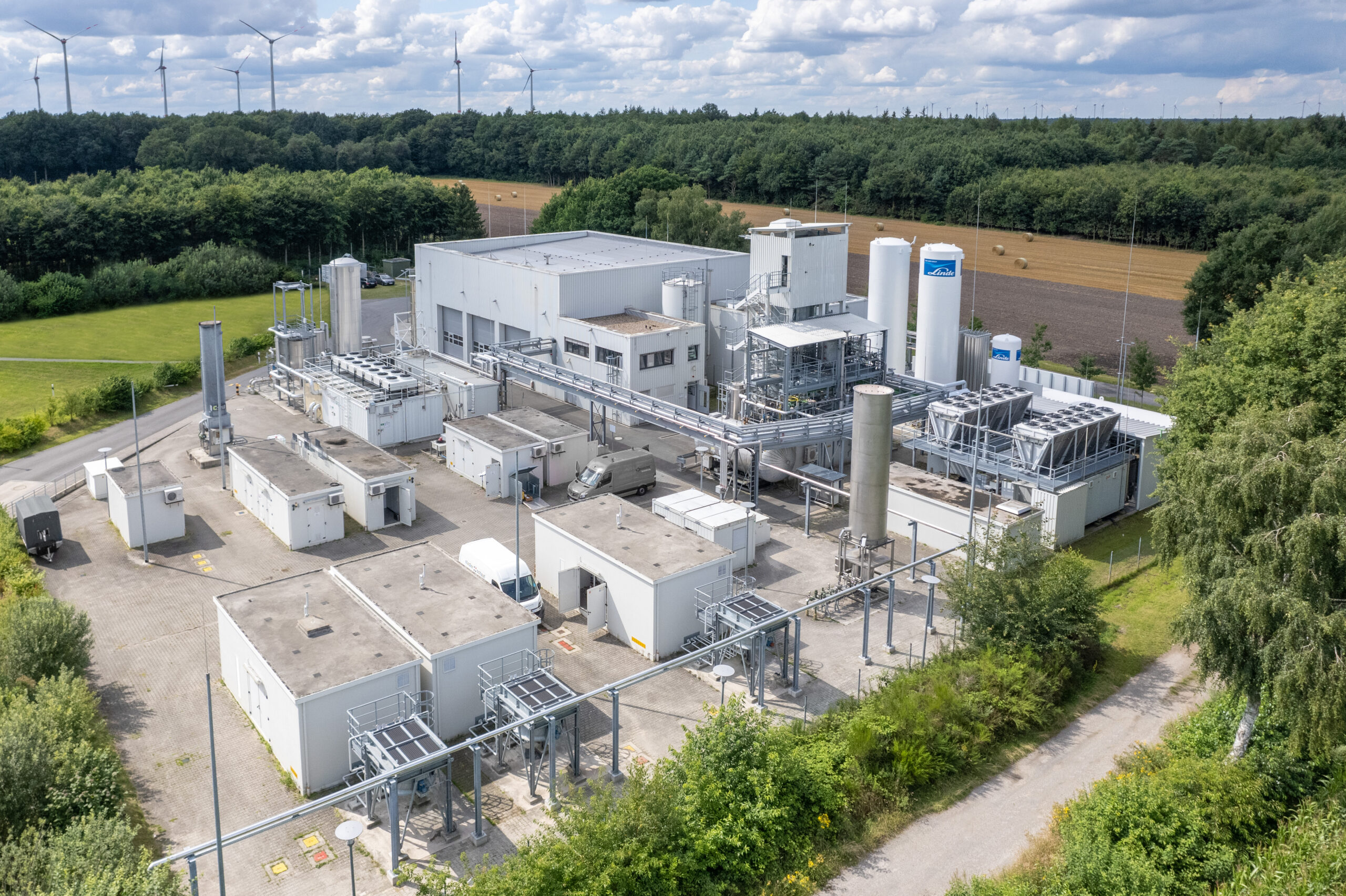
      An innovative hydrogen cycle is being built at the company's Krummhörn site: a PEM electrolyser, an intermediate storage tank and a fuel cell-based combined heat and power (CHP) plant.

      The electrolyser

      The PEM electrolyser has an output of 1 megawatt (MW) and a capacity of 210 standard cubic metres of gas per hour (Nm³/h). The surrounding onshore and offshore wind farms provide the electricity demand of 1.2 MW.

      The cache

      A tubular storage tank with a capacity of 2,400 cubic metres (m³) will be built for the intermediate storage of the hydrogen.

      The bKWK plant

      The fuel cell-based combined heat and power plant (CHP plant) generates electricity and waste heat. This is a high-temperature fuel cell with an electrolyte made of ceramic material. The basis is solid oxide fuel cell (SOFC) technology. The advantage of this is that the liquid electrolyte is replaced by a special ceramic, which in this case enables a particularly high efficiency in the generation of electricity from hydrogen. This is further increased by the fact that the waste heat is used to heat the plant. Two existing condensing boilers will be converted to use hydrogen for the further necessary heat demand.

      Passenger car hydrogen filling station

      A hydrogen-fuelled car filling station, yet to be built, will supply the OGE vehicle fleet with alternative fuels (filling pressure: 700 bar). The vehicle fleet is to be expanded with at least three hydrogen-powered fuel cell vehicles. 

      The project is scheduled to run until summer 2023.


      Partner

      Open Grid Europe GmbH (OGE) is a European transmission system operator with a pipeline network of approximately 12,000 km.

      Logo: © Open Grid Europe GmbH

      Stay informed - with our newsletter "NWN direkt..."

      You want to stay informed about these and other exciting hydrogen projects from Lower Saxony? Then sign up for our newsletter!

        Fairfuels

        Fairfuels

        PROJECTS

        Fairfuels

        In order to achieve the climate goals, greenhouse gas emissions must be significantly reduced, especially in the transport sector. The decarbonisation of air transport plays an important role here by replacing conventional paraffin with climate-friendly fuels. The Fairfuels project shows how this can be achieved: with the help of green hydrogen andCO2 from the atmosphere, synthetic oil is produced, which can ultimately be used as e-kerosene in aviation.

        News (28.06.2024): World's first industrial plant in Werlte produces five tons of e-kerosene for aviation!

        According to atmosfair, the first five tons of e-kerosene have now been produced in Werlte - making it the first industrial-scale plant to successfully produce e-kerosene, according to the operators. 

        The first flights using the substance from Werlte mixed with conventional kerosene could take place as early as the fall - albeit at just 0.1 percent. "Until larger production capacities are achieved, it is essential that we all fly less," explains atmosfair. Read more

        In Werlte, Emsland, the non-profit organisation atmosfair has developed a process to produceCO2-neutral paraffin for aviation using a power-to-liquid plant. In an electrolyser, green hydrogen is first produced from water with the help of PV and wind power. With the green hydrogen and carbon obtained from the ambient air and from biogas plants, synthetic crude oil is then produced in a synthesis plant. In a final step, the synthetic crude oil is finally processed into e-kerosene at the refinery in Heide.

        As part of the project, around 8 barrels of synthetic oil per day will be produced and supplied to participating partners. The project serves as a model for the successful decarbonization of aviation. However, the successful decarbonization of aviation requires a number of large-scale imitators. The Fairfuels project is therefore intended to show how the production of e-kerosene can be made possible on a large scale in countries with a high supply of renewable energies - which will ultimately be available for import to Germany.

        More about the project

        About atmosfair

        atmosfair gGmbH is a non-profit climate protection organisation based in Berlin. atmosfair carries out climate protection projects, advises and accompanies companies and institutions in their transformation and makes it possible to offset unavoidable CO₂ emissions in the global South.

        © atmosfair

        Stay informed - with our newsletter "NWN direkt..."

        You want to stay informed about these and other exciting hydrogen projects from Lower Saxony? Then sign up for our newsletter!

          LIHYP - LINKING HYDROGEN POWER POTENTIALS

          LIHYP - LINKING HYDROGEN POWER POTENTIALS

          PROJECTS

          Credit DBT Inga HaarSource: NWN/Rainer Jensen
          Pilot projects in the Netherlands, Denmark, France, Belgium and Germany are intended to lay the foundations for further projects.

          International cooperation is the only way forward for the energy transition, which has become more urgent than ever. By pooling willpower, knowledge and best practices within the LIHYP project, the necessary tools will be created that will effectively contribute to a sustainable, secure and autonomous energy future. European cooperation at its best!

          Ingrid Klinge

          Lead partner and project coordinator of LiHYP, New Energy Coalition - NL

          LIHYP - Linking Hydrogen Power Potentials

          "Bringing together stakeholders to develop a regional hydrogen economy in the North Sea region" - this is the motto of the "LIHYP" project: Various pilot projects for the use of hydrogen are to be carried out in the Netherlands, Belgium, Denmark, France and Germany, e.g. hydrogen cargo bikes, hydrogen-powered freight trains, hydrogen bus stations and living labs. In addition, a hydrogen platform for the North Sea region will be set up to connect the relevant stakeholders and a solid database for hydrogen demand, production and supply will be created.

          With offshore hubs and recent agreements between North Sea countries on hybrid offshore cooperation projects to become "Europe's green power plant", the region is seeking to supply the EU with green electricity and reduce dependence on imports. Despite numerous European initiatives for regional H2 development supported by national and EU programmes, few focus on knowledge exchange and interregional optimization.

          LIHYP closes this gap by promoting intensive cooperation between regional players along the North Sea and connecting them across the entire hydrogen value chain for the exchange of know-how and cooperation between decision-makers, implementers and investors.


          The entire project is scheduled to run until January 2027. The roadmap that is being drawn up for the overall project has a time horizon until 2030.

          The overall project is divided into four work packages and five sub-projects:

          Work packages

          WP 1 - Pioneering cooperation in the field of hydrogen: launch of the NSR platform

          WP 2 - LIHYP pilot activities: Driving innovation with H2 demonstrators

          WP 3 - Harmonization of regulations for the integration of green hydrogen

          WP 4 - Realization of interregional dynamic H2 roadmaps


          Subprojects

          Ghent, Belgium: Living Lab Belgium

          Groningen, Netherlands: Hydrogen Valley Airport - Groningen Airport Eelde

          Oldenburg, Germany: Development of a local Energy HUB for city cargo

          Handest Hede, Denmark: Hydrogen Refueling Station connected directly Wind/PV site

          Bentheim, Germany: Hydrogen driven freight train in the cross-border region DE/NL


          As the Lower Saxony Hydrogen Network, we take a closer look at the projects in Lower Saxony here.

          Development of a local energy hub for inner-city logistics

          Source: LIHYP
          The focus of the pilot project from OldenburgThe new fuel cell cargo bikes are designed to facilitate inner-city logistics.

          Fuel cell cargo bikes for inner-city logistics enable longer operating times and benefits for the operator. This proof is being investigated in the project as a technical demonstration. Both the supply of green hydrogen and its provision are being investigated. In addition, the influences of fuel quality and the filling of the tanks for use in the vehicle will be conceptually and prototypically implemented. Both official regulations and labor law requirements for handling hydrogen must be implemented accordingly.

          In addition to the reduction in emissions and the new logistical advantages, the pilot project should also be able to be recommended to other regions as a blueprint. To this end, the project will promote appropriate communication and presentation of the concept to interested parties.


          Hydrogen-powered freight train in the DE/NL border region

          Source: AdobeStock_9377671
          As part of the pilot project from Bentheim, an in-depth analysis of the economic and ecological feasibility of hydrogen trains in the border region is being carried out and the foundations are being laid for the use of hydrogen-powered freight trains in the border region between north-west Germany and the northern Netherlands.

          The transportation of goods is always associated with the emission of greenhouse gases. There are various approaches to reducing these emissions, such as combining different transportation solutions (trains, trucks, inland waterway vessels, aircraft) or using "green" drive technologies such as battery-powered electric vehicles.

          Although freight transport by rail generally has a low carbon footprint, freight trains often use diesel engines because not all tracks and especially freight stations are fully electrified - and cross-border transport is not always possible even on fully electrified tracks. Alternative drive solutions are therefore required for the greenhouse gas-free transportation of goods by rail - especially in an international context.

          But what does it take to run a cross-border freight train on hydrogen? What are the technological challenges, how does the hydrogen supply make the most sense and what synergies can be generated in the region?

          Beyond the project, the results will help to ensure that further projects can be implemented more easily and that the first steps towards CO2-neutral freight trains can be taken.

          The project is financed within the framework of the INTERREG North Sea program and is therefore CO-financed by the European Union.

          More information on the website.


          Lead partner

          Project partners in Germany

          10 megawatt electrolyzer in the port of Brake

          10 megawatt electrolyzer in the port of Brake

          PROJECTS

          Hydrogen economySource: Andreas Burmann

          A 10-megawatt electrolyzer is to be built at the port in Brake!

          Lhyfe builds 10 megawatt electrolyzer in Brake, Lower Saxony

          The construction of an electrolyzer with a capacity of 10 megawatts will begin in Brake, Lower Saxony, in February 2024. The project will be implemented by hydrogen producer Lhyfe on the NiedersachsenPorts site at the port of Brake and is to be embedded in the local value chain, particularly in the mobility and industrial sectors. According to Lhyfe, the 10 MW plant will be able to produce produce up to 1,150 tons of green hydrogen per year.

          The development of electrolysis capacities is crucial for a successful hydrogen ramp-up. The French company Lhyfe is active as a hydrogen producer and supplier in 12 European countries and now also wants to produce green hydrogen in Brake, Lower Saxony.

          The renewable electricity required for this is to be sourced from various producers via power purchase agreements (PPAs) from wind and photovoltaic plants. Lhyfe expects to supply the first hydrogen to various customers for industrial and mobility applications from 2025 .

          The hydrogen produced will also be fed into the local hydrogen network. In this way, industrial companies that are connected to the hydrogen network via pipeline can benefit from the electrolysis capacity on site. The project will also make an important contribution to the decarbonization of the industrial port complex and maritime transport in the region.

          Groundbreaking ceremony on February 1, 2024 in Brake 

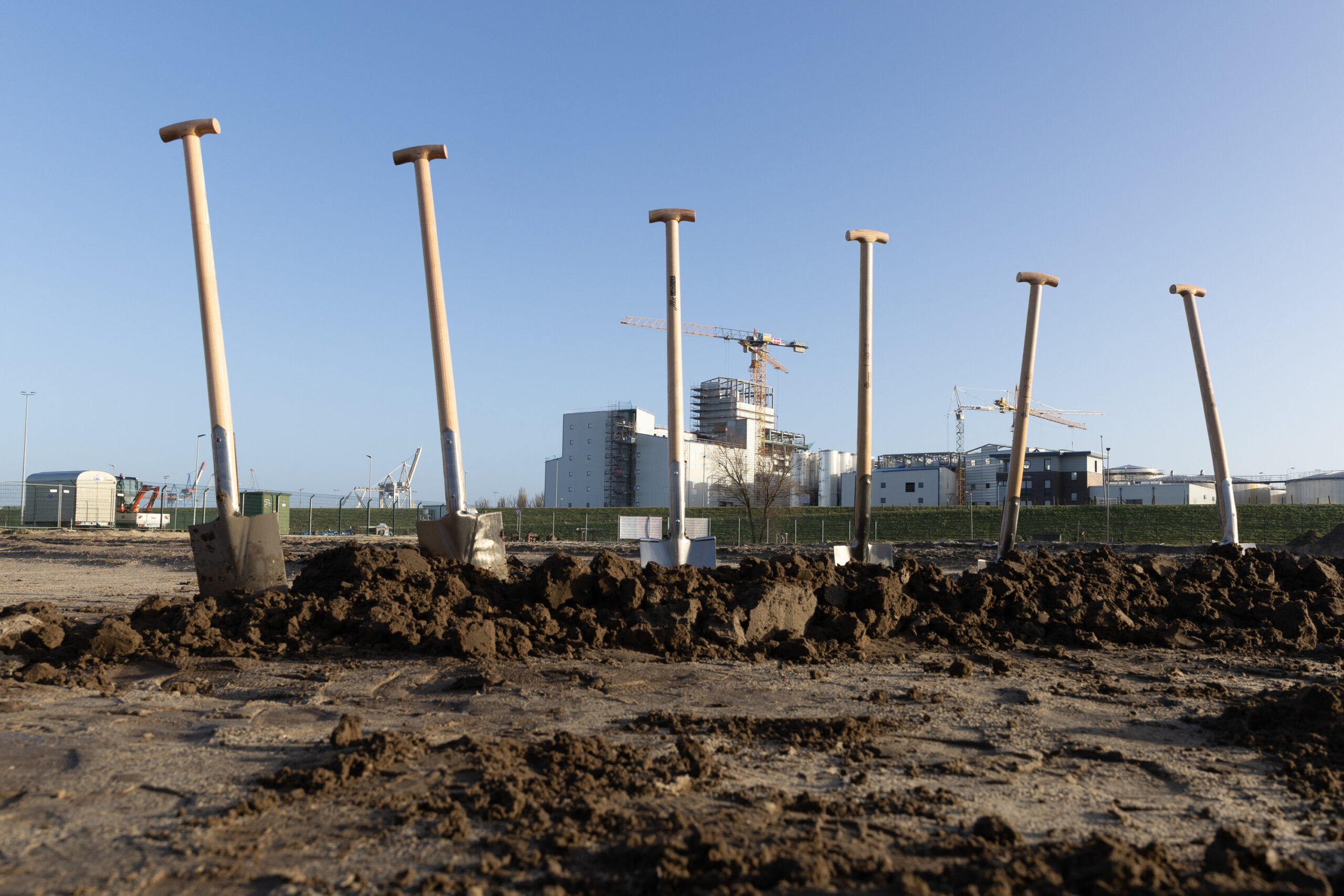
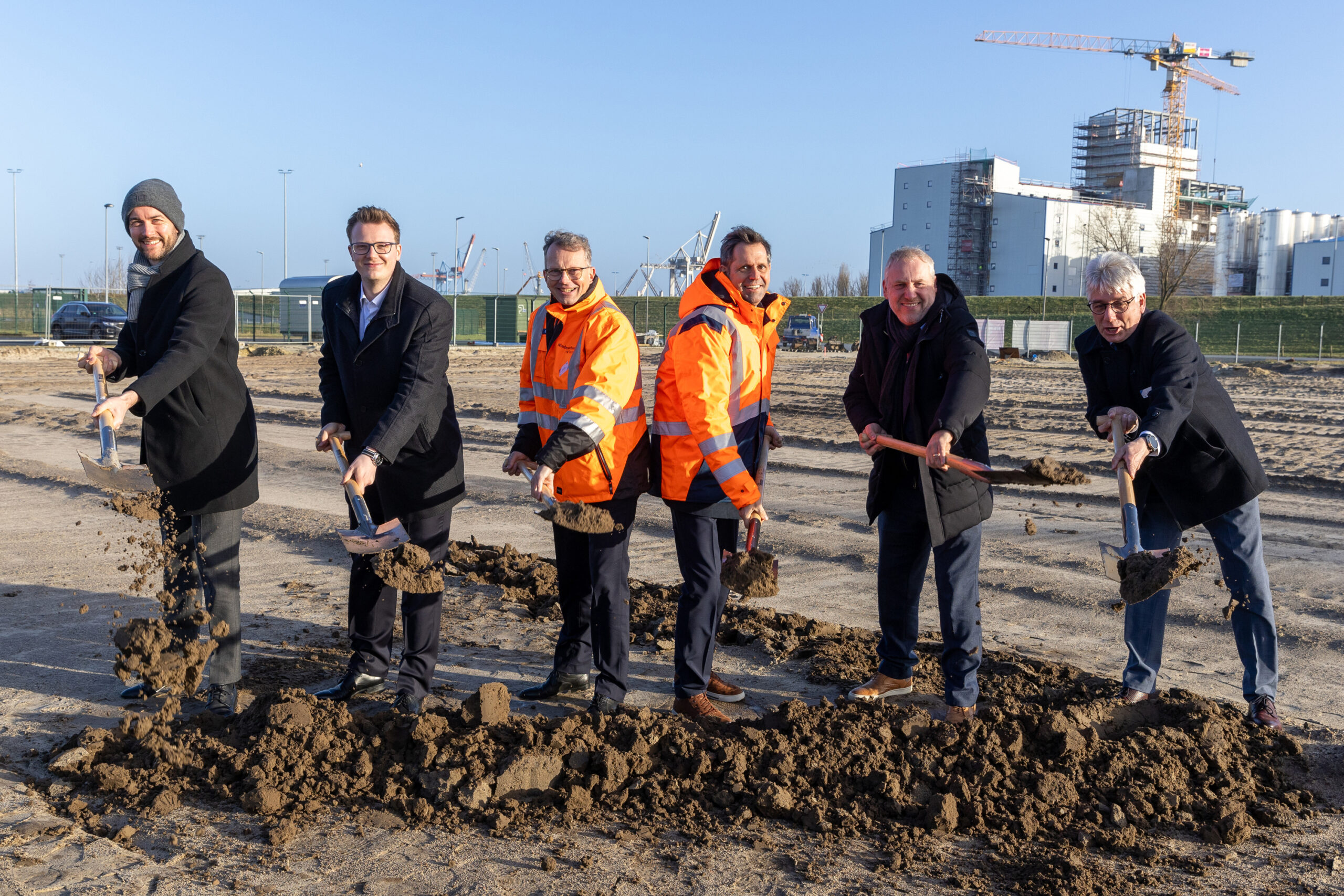
          The implementation of the project is already in full swing, with construction work in the port of Brake set to begin in early 2024. In this context, the symbolic ground-breaking ceremony took place in Brake on February 1. Further information can be found here.

          Source: Andreas Burmann

          Groundbreaking ceremony in Brake: On February 1, the ground was broken by Dr. Alexander Bedrunka (Project Manager NWN), Tim Eshold(Glencore / H2 Marsch), Holger Banik (Managing Director of Niedersachsen Ports), Olaf Lies (Lower Saxony's Minister of Economic Affairs), Luc Graré (Head of Central & Eastern Europe at Lhyfe) and Michael Kurz (Mayor of Brake). 

          Voices on the project

          The project combines innovation, sustainability and regional strength and is an example of successful cooperation on the path to a comprehensive and sustainable transformation of our energy system.

          Olaf Lies

          Lower Saxony Minister for Economic Affairs, Transport, Building and Digitization

          We are delighted to be able to realize this showcase project of 10 MW and to support the state of Lower Saxony in its ambitious goals of establishing a nationwide hydrogen infrastructure.

          Luc Graré

          Head of Central & Eastern Europe at Lhyfe

          About Lhyfe:

          Lhyfe is a European group with around 195 employees that produces and supplies green and renewable hydrogen. The production sites and project portfolio aim to provide access to green hydrogen on an industrial scale, particularly for the industrial and transportation sectors.

          Stay informed - with our newsletter "NWN direkt..."

          You want to stay informed about these and other exciting hydrogen projects from Lower Saxony? Then sign up for our newsletter!